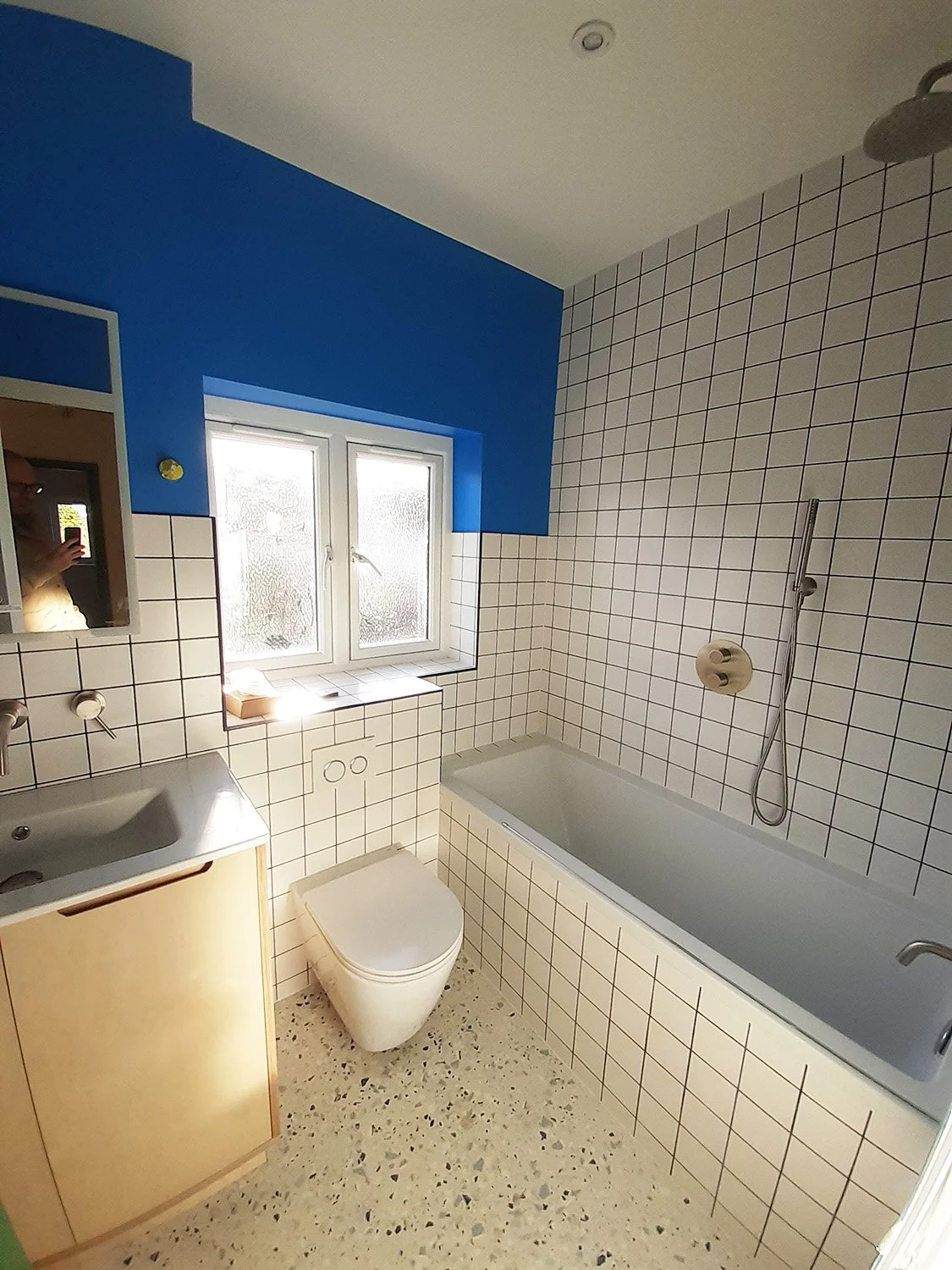
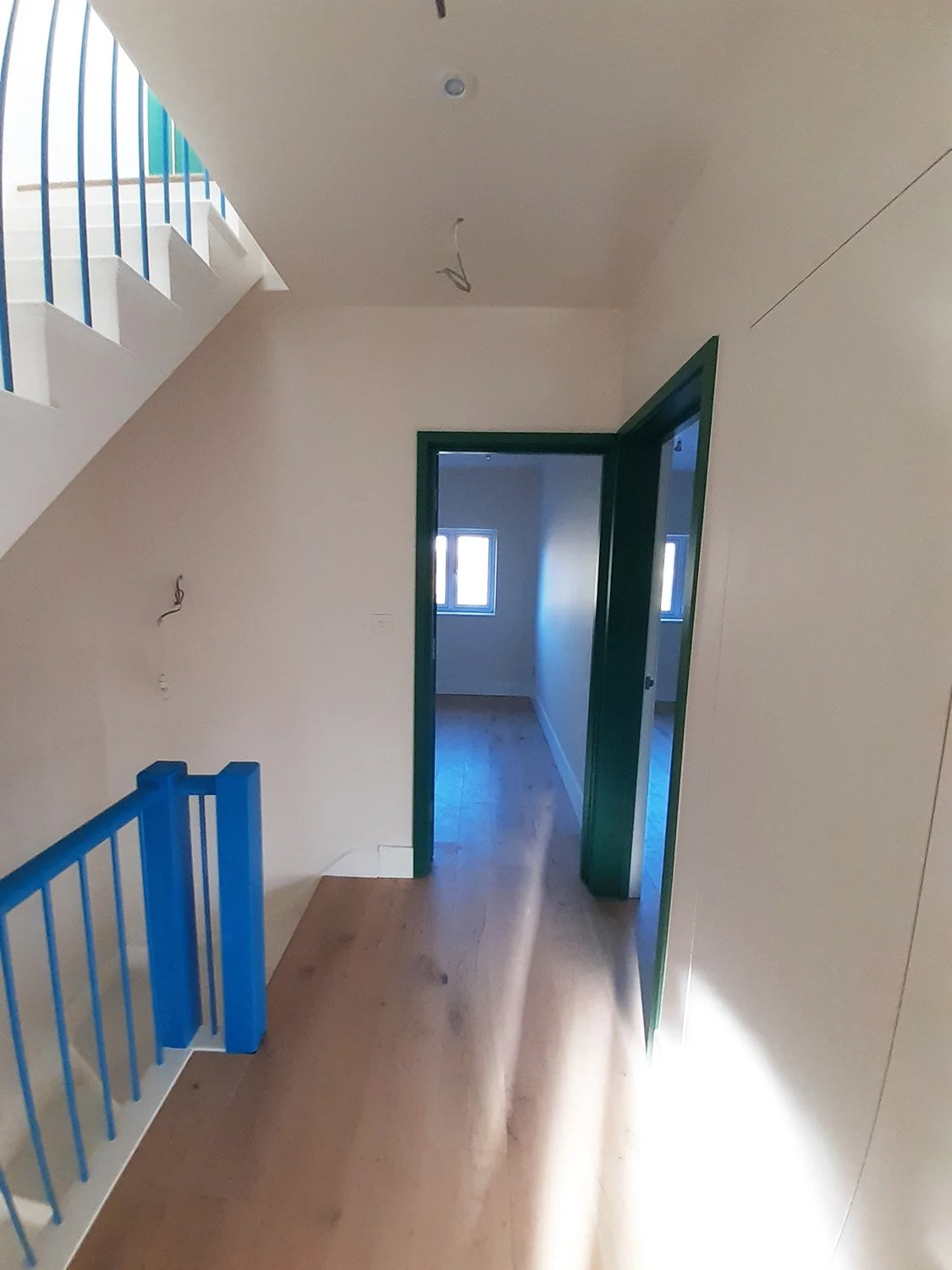
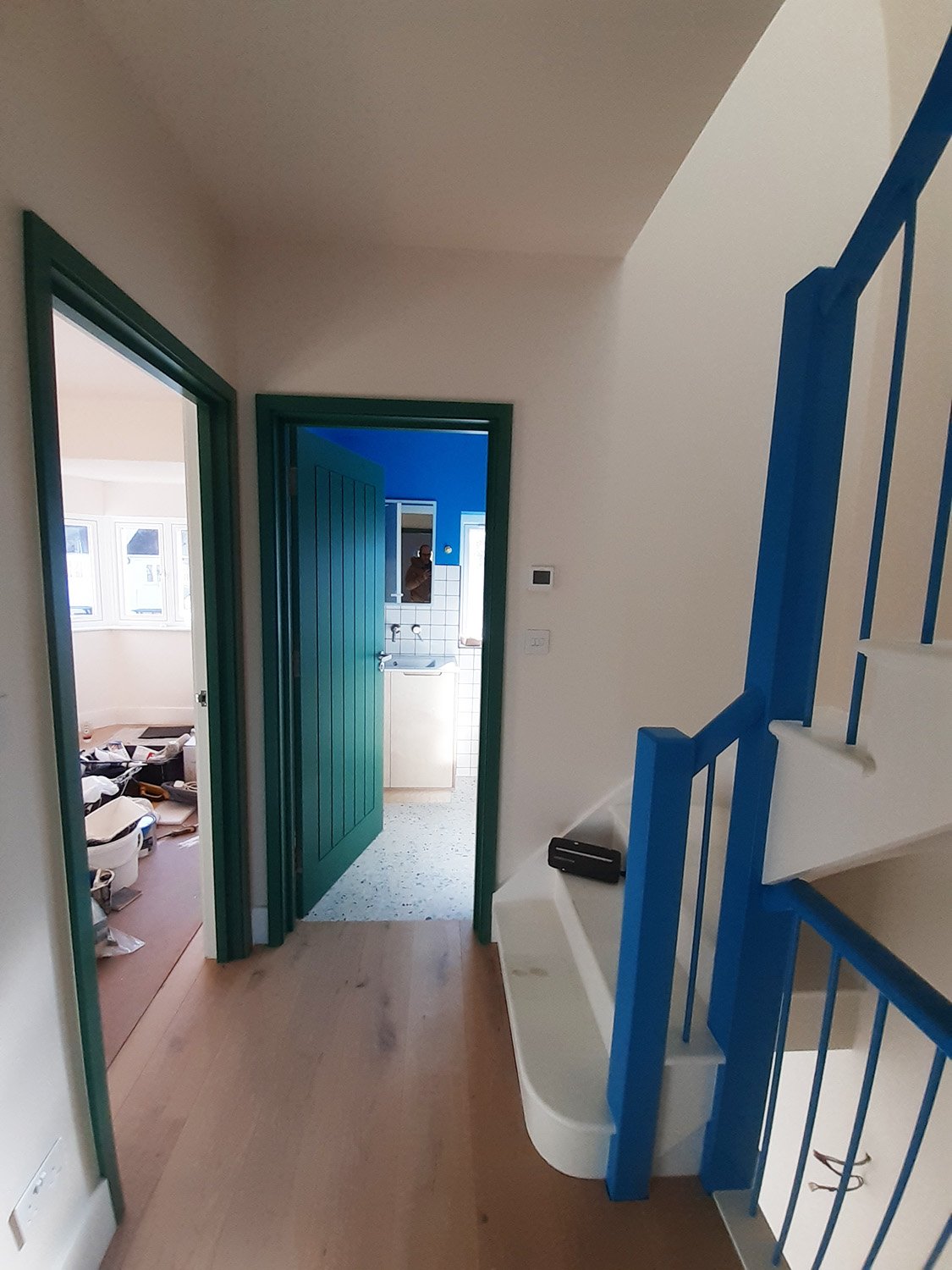
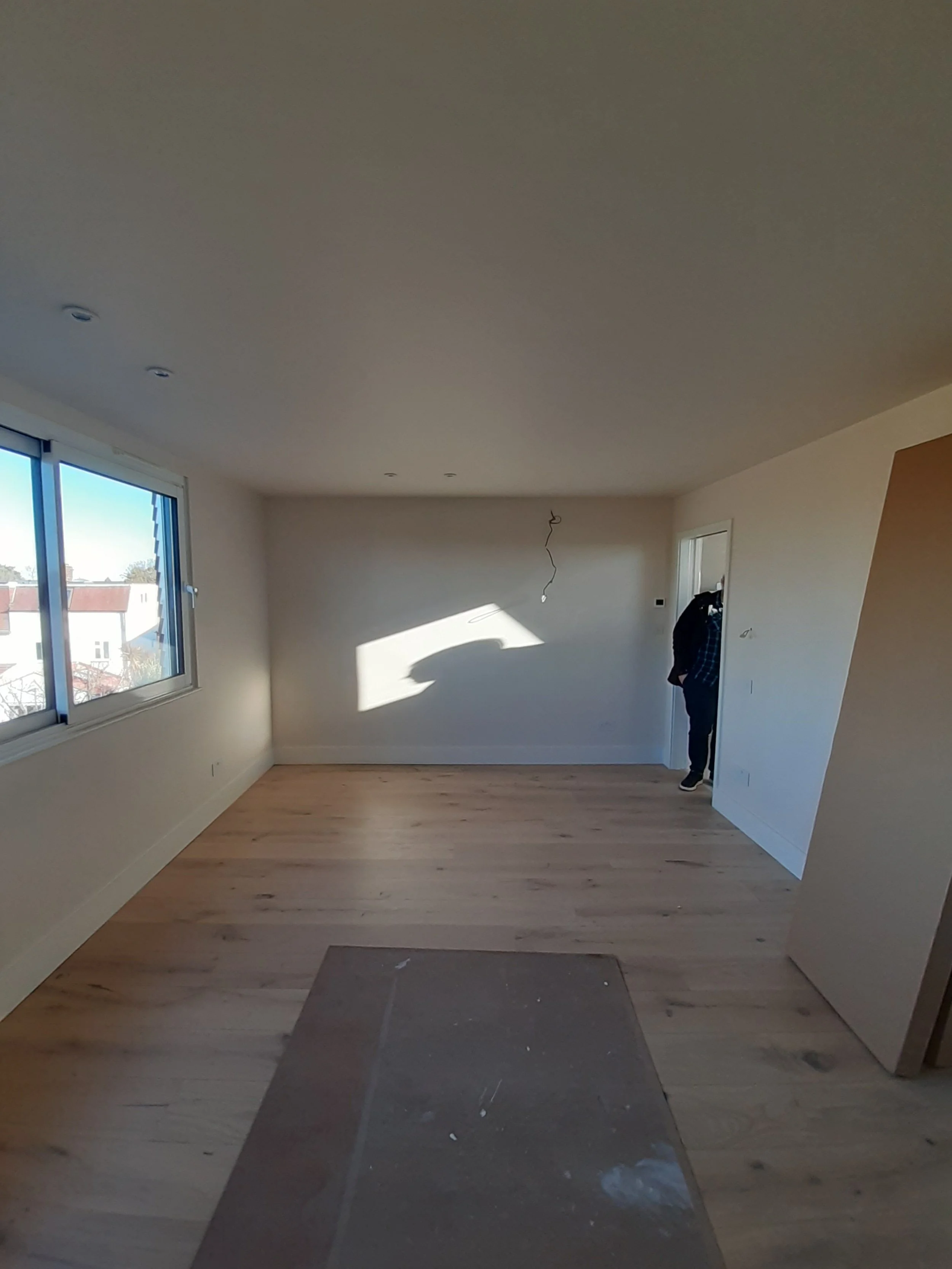
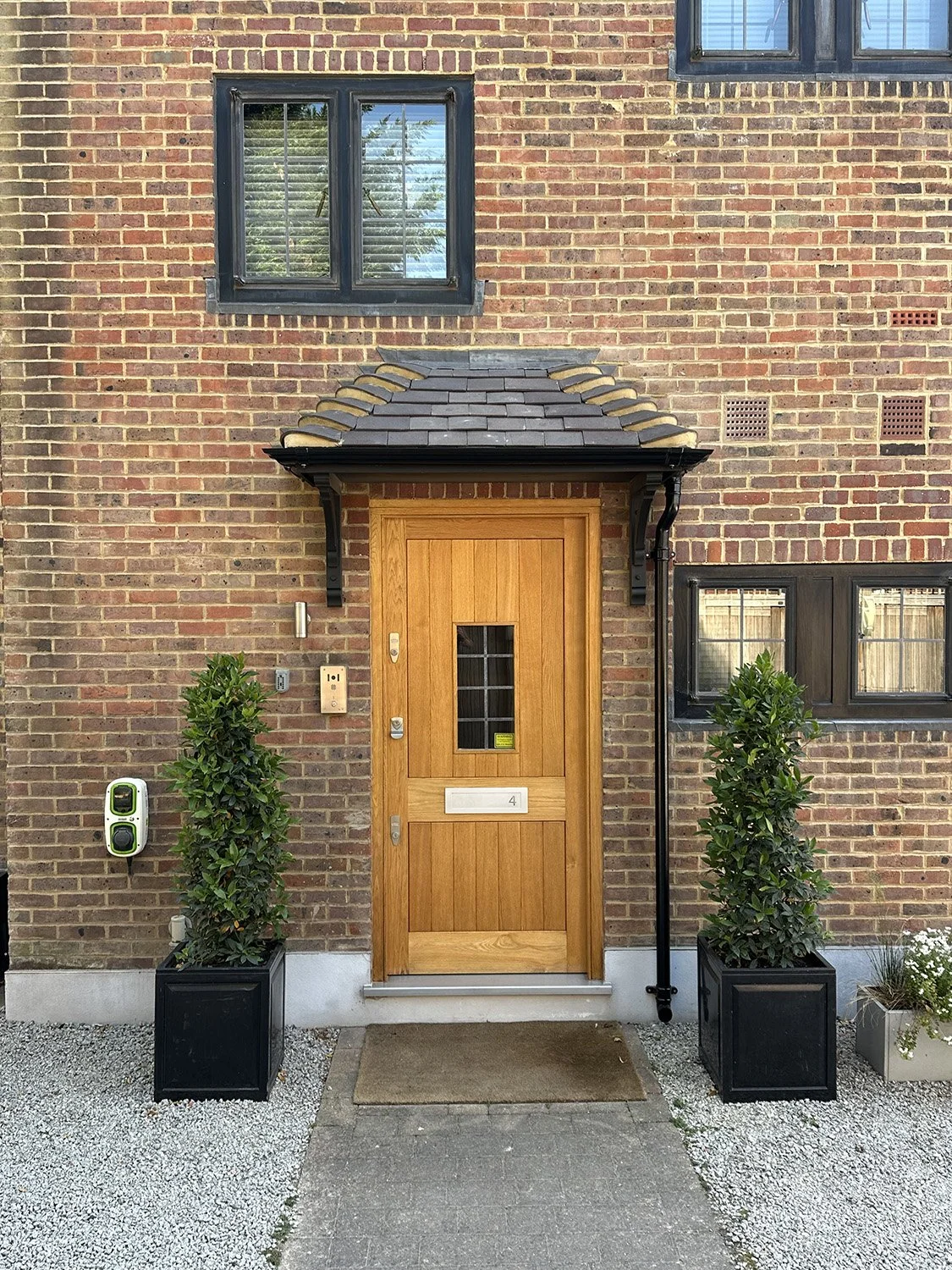
Surbiton Project Nearing Completion

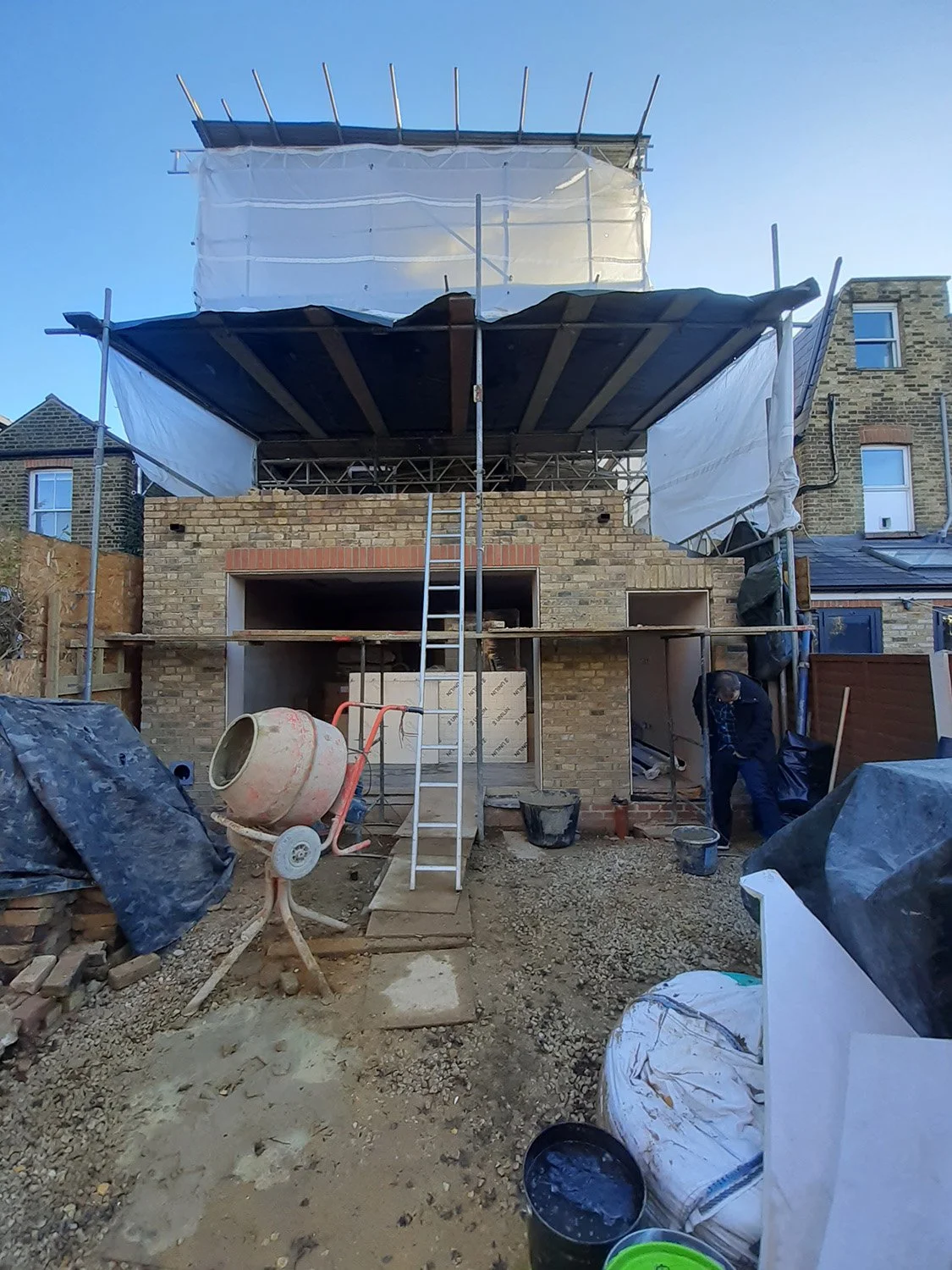
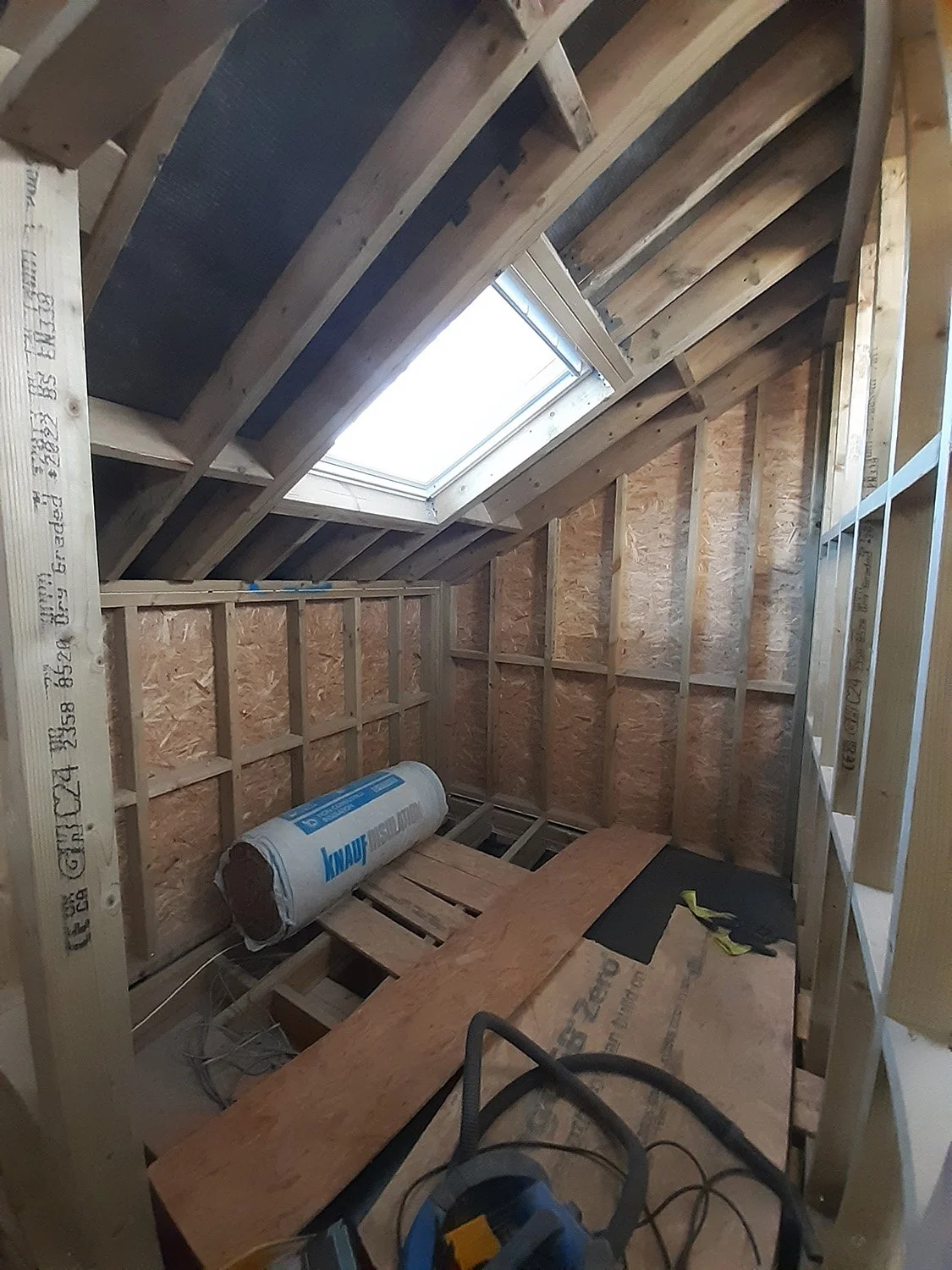
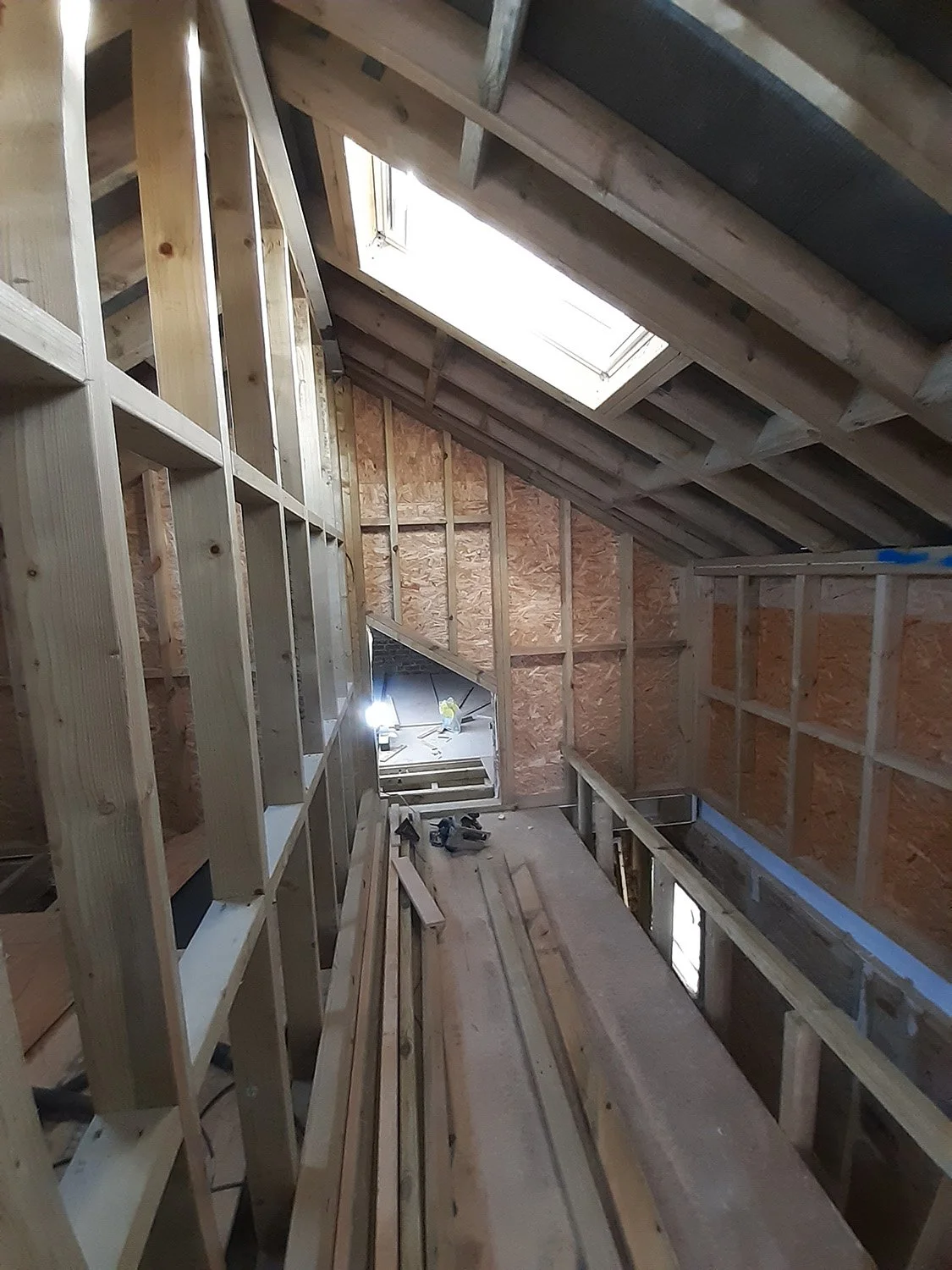
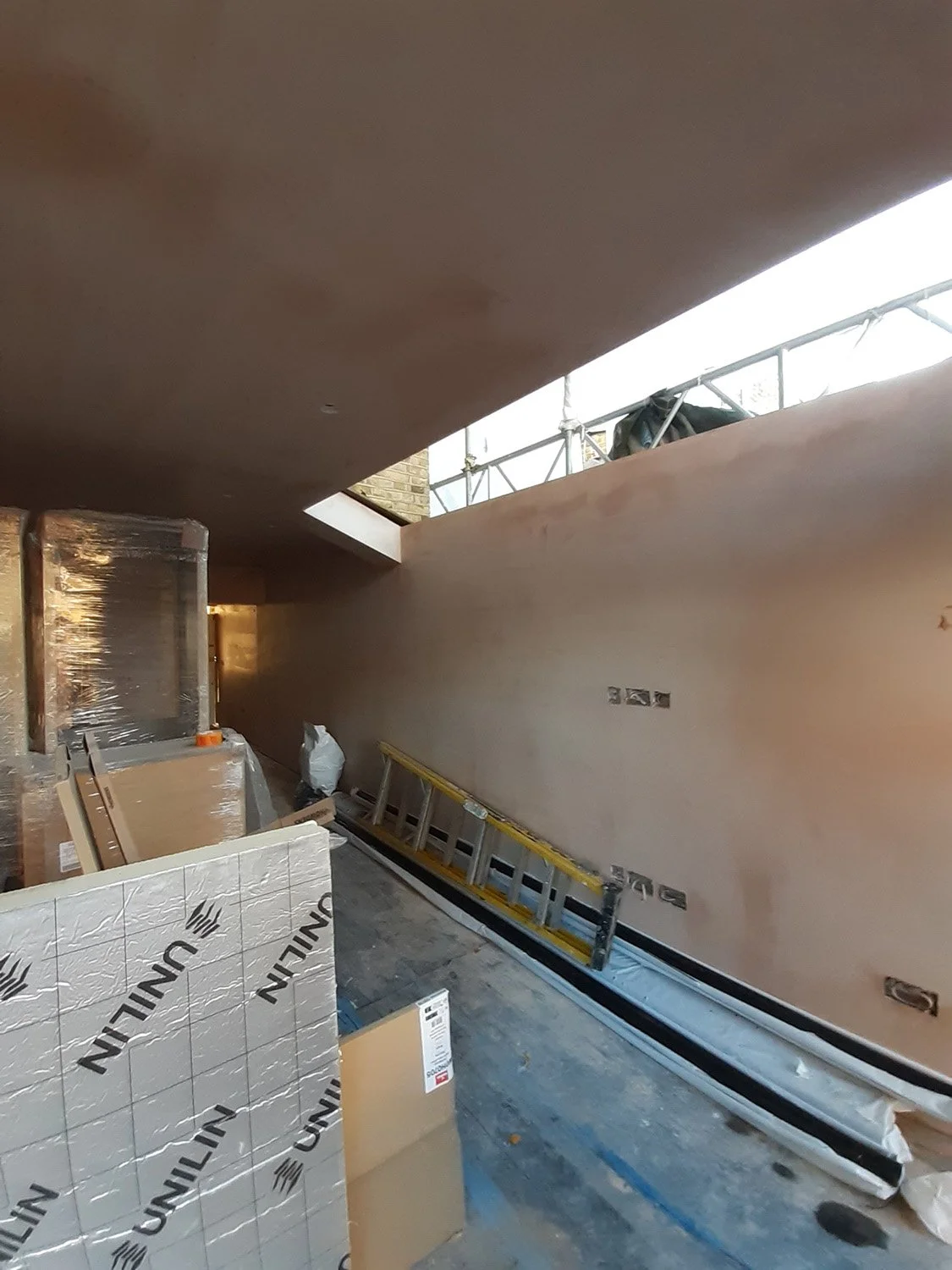
Our Surbiton project is now approaching completion, and we recently met with the client and contractor on site to review progress and discuss the final steps before handover.

With the major construction works complete, attention is now focused on a number of final details and administrative items required to bring the project to a successful conclusion. It was encouraging to see the quality of the completed spaces and the way natural light animates the interior throughout the day.

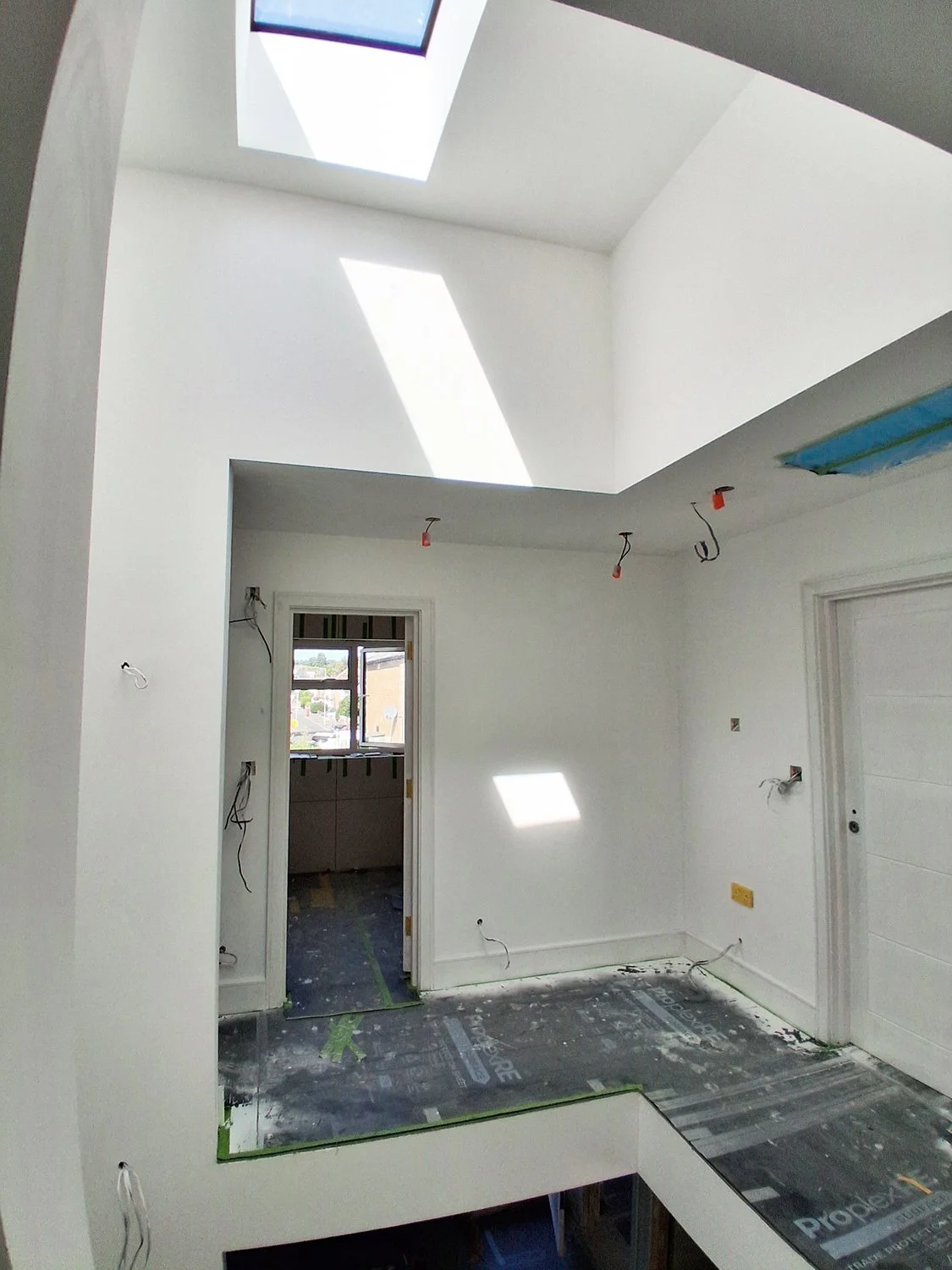
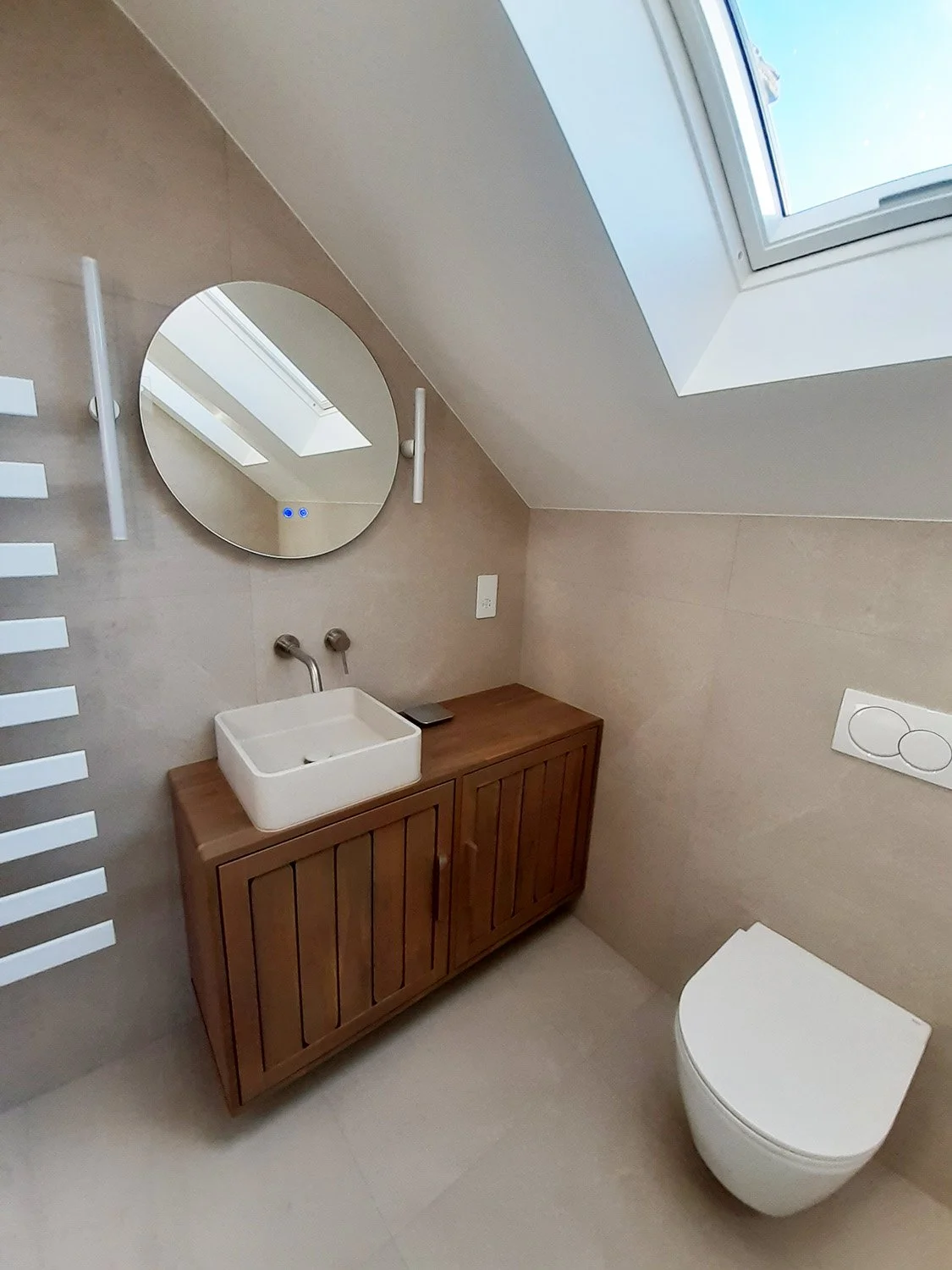
The project has transformed the existing house through a series of carefully considered alterations, creating brighter and more generous living spaces while remaining sensitive to the character of the original property. Features such as the new rooflight and double-height spaces help draw daylight deep into the home, creating a strong connection between different levels of the house.

As architects, it is always satisfying to reach this stage of a project and see the design vision realised through the collaboration of client, contractor and consultant team. We look forward to sharing professional photographs once the project is fully complete.

Hampton Hill House Extension Nearing Completion

When our clients first approached us about their property in Hampton Hill, they were looking to transform a house that had been altered several times over the years into a more cohesive and functional family home.

The existing three-bedroom end-of-terrace property already included a side return extension, conservatory and loft conversion. While these additions had increased the available accommodation, the overall layout lacked the sense of flow and connection that the clients wanted for modern family living.

A key objective of the project was to replace the ageing conservatory with a new rear extension capable of accommodating a generous open-plan kitchen and dining space. Internally, the layout was also reorganised to create a more practical arrangement, including a separate reception room to the front of the house, improved service spaces and upgrades to both the first-floor and loft-level bathrooms. Particular attention was given to sustainability considerations and improving acoustic insulation along the party wall with the adjoining property.

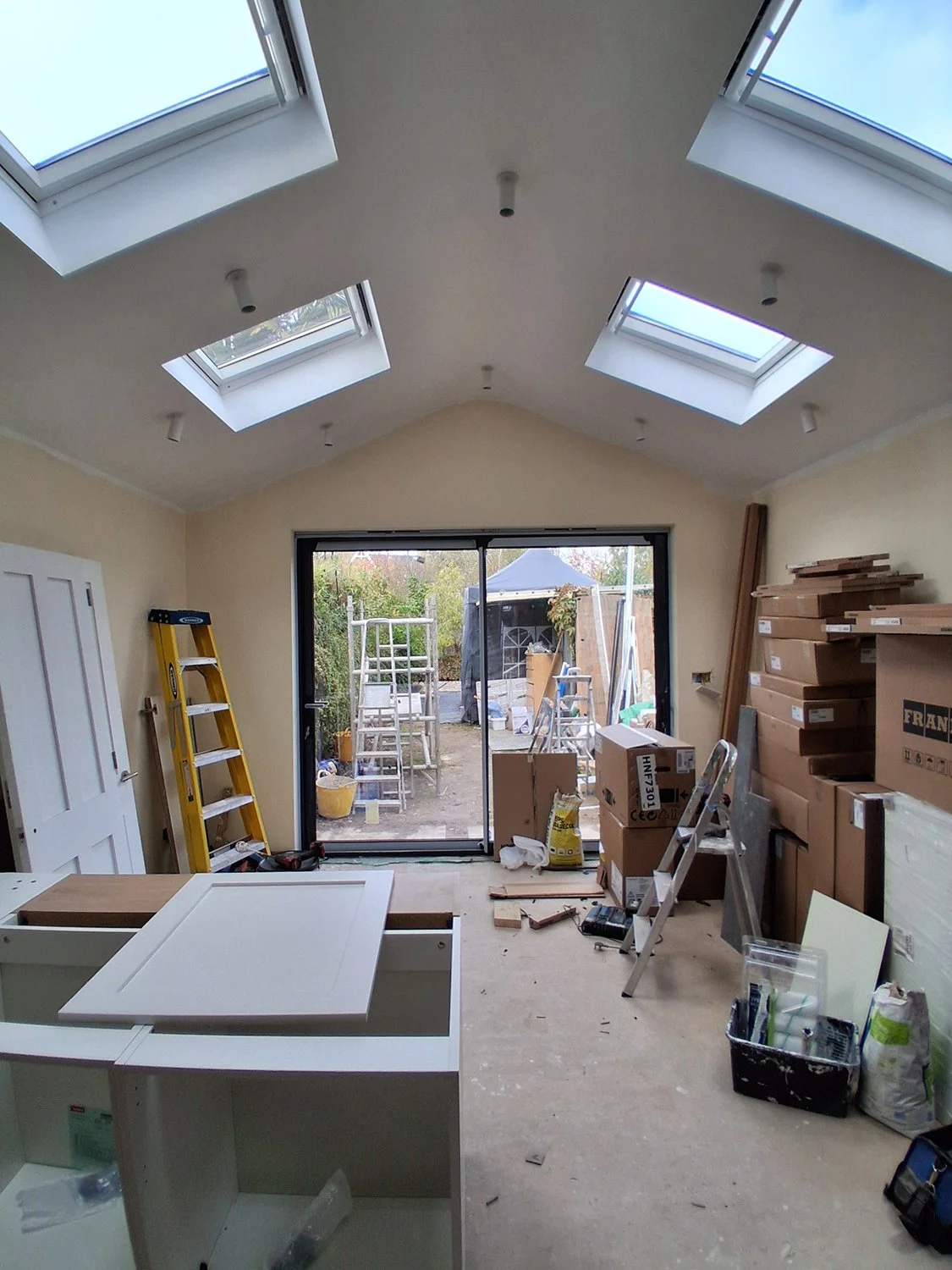
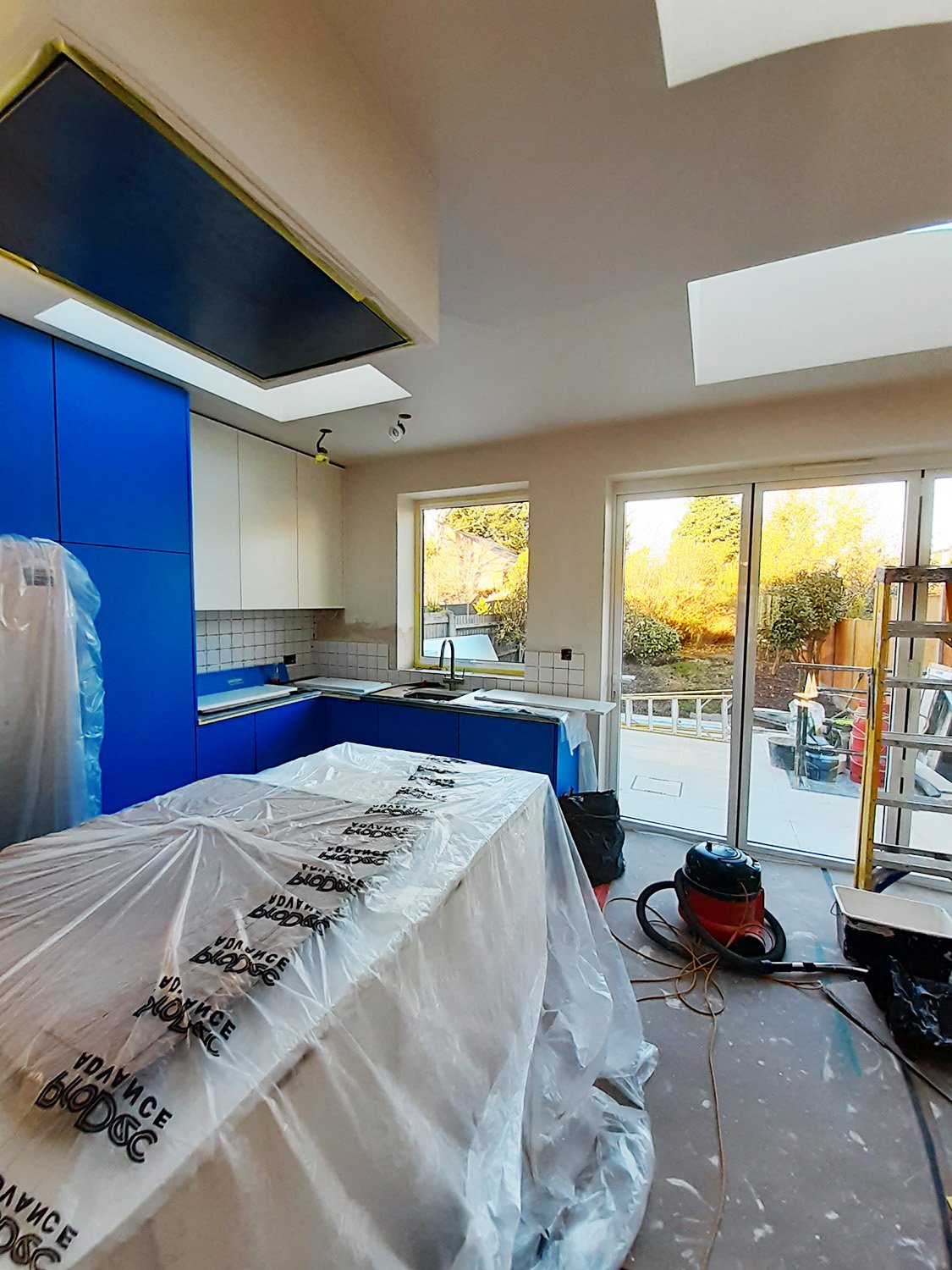
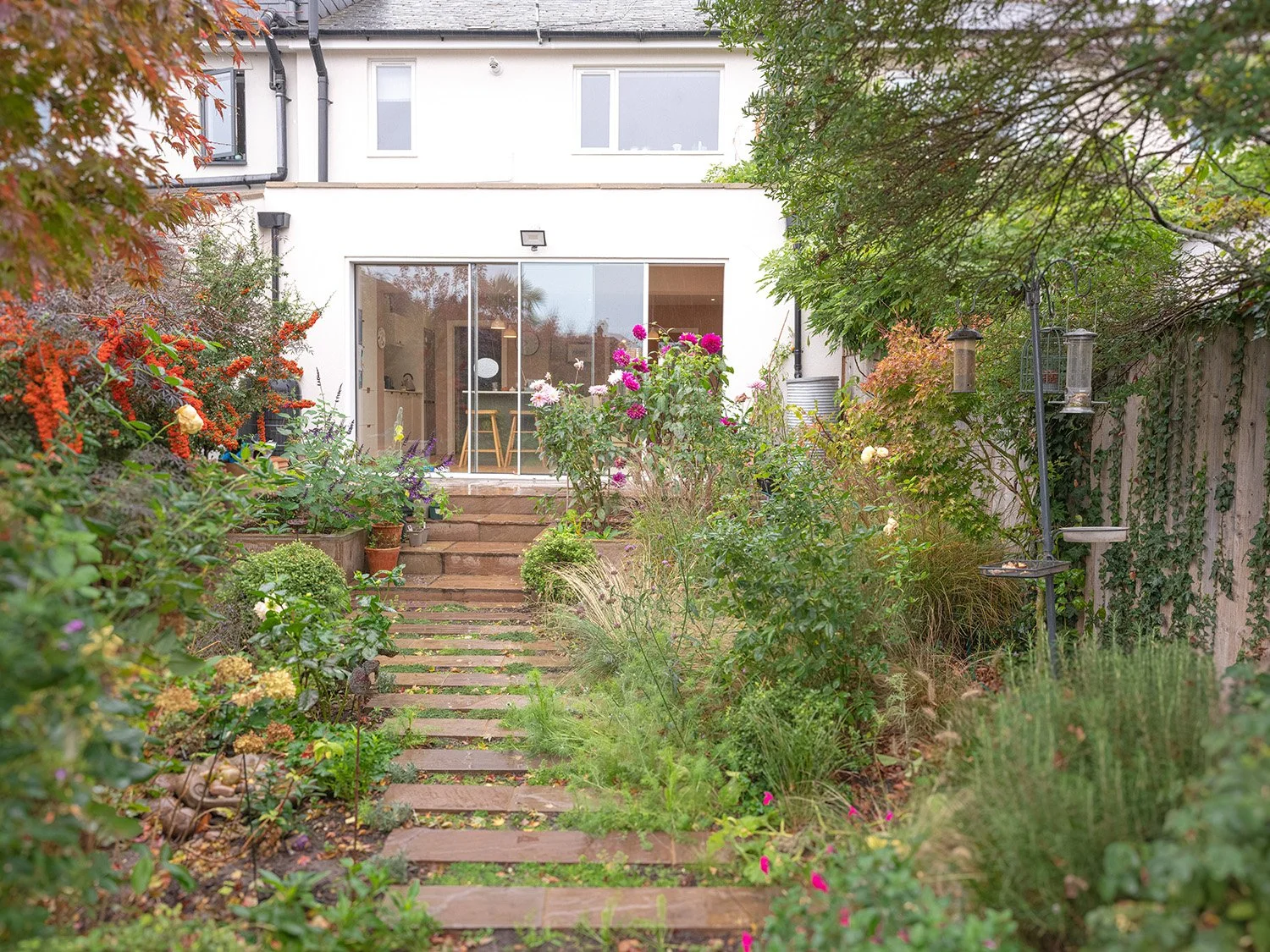
During our recent site visit, it was encouraging to see how far the project has progressed. The new rear extension is now taking shape and the quality of the space is becoming increasingly apparent. A vaulted ceiling, punctuated by four large rooflights, draws natural daylight deep into the interior, creating a bright and welcoming environment throughout the day. Large sliding doors frame views of the garden and will provide a strong visual and physical connection between the home and the outdoor space.

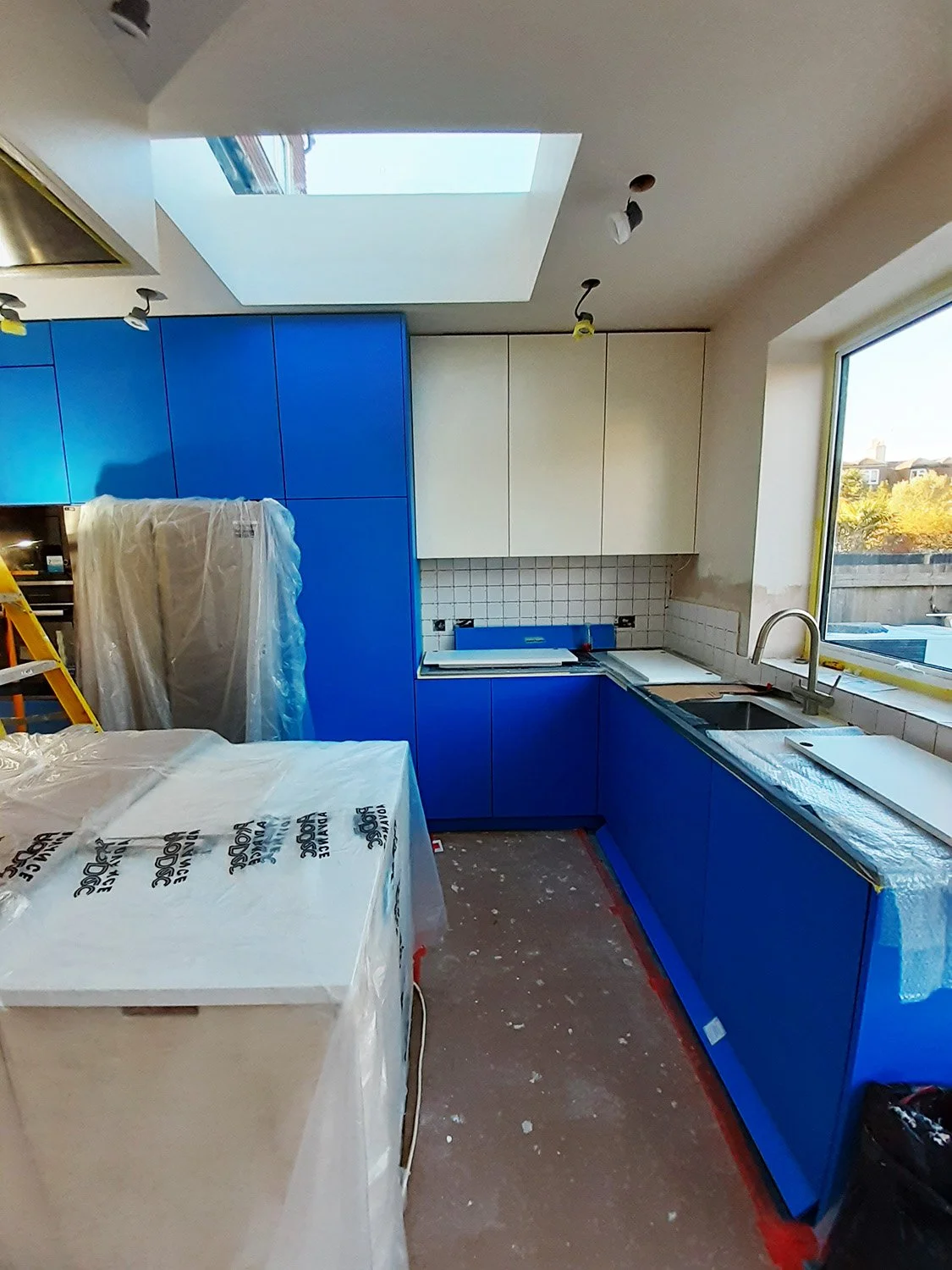
With the kitchen installation underway, the scale and character of the room are now much easier to appreciate. The transformation from a relatively enclosed conservatory to a contemporary family living space is substantial, and the architectural intentions behind the design are beginning to come to life.

Construction is progressing well, with significant advances having been made since our previous visit. Discussions are currently ongoing regarding the final flooring specification, with the clients.

Subject to continued progress on site, the project is expected to reach completion by the end of the month. We look forward to returning once the finishing touches have been completed to photograph the finished result and share the completed transformation.

Saving a Stalled Extension Project in Surbiton: Turning a Construction Challenge into an Opportunity

Not every residential project follows a straight path from planning approval to completion. Occasionally, homeowners find themselves dealing with unforeseen challenges that require a fresh approach, careful analysis and a clear strategy to move forward.

We were appointed to help rescue and redesign a substantial extension project for a detached family home in Surbiton. While the project is now approaching completion, the journey highlights the importance of accurate design information, coordinated construction documentation and experienced professional guidance throughout the building process.

The Original Vision

The property is a four-bedroom detached house that was originally intended to benefit from a new double-storey side extension, replacing an existing garden room and creating additional living accommodation for a growing family.

We first discussed the project with the owners in 2022 and provided an initial proposal to develop the design. Following these early conversations, the homeowners chose to proceed with an alternative designer, who prepared the planning, tender and construction drawings.

Planning permission was subsequently obtained and construction works commenced on site.

Problems Emerge During Construction

As the build progressed, concerns began to arise regarding the quality and accuracy of the design information being used on site.

A critical issue related to the roof geometry of the existing house. The approved drawings showed the original roof at a pitch of approximately 30 degrees, whereas the actual roof was significantly shallower, measuring closer to 17 degrees.

While this may appear to be a relatively minor discrepancy on paper, roof geometry influences numerous elements of a building's design, including ridge heights, junctions, structural arrangements and overall proportions.

The inaccurate survey information ultimately created a significant problem once construction reached roof level.

When Drawings and Reality Don't Match

Because the existing roof had been drawn incorrectly, the proposed extension roof could not align in the manner originally intended. The result was a mismatch between the existing and proposed roof forms, creating both design and construction challenges.

Disagreements then arose regarding responsibility for resolving the issue. Additional costs were requested, confidence in the project deteriorated and progress on site came to a halt.

By March, construction had stopped entirely, leaving the homeowners with an incomplete extension and an uncertain route forward.

Developing a New Strategy

When approached to review the situation, our first step was to establish an accurate understanding of the existing building and assess the implications of the approved planning drawings.

It quickly became apparent that the approved drawings did not accurately represent the property as built. This raised concerns that the approved scheme could potentially be challenged if the discrepancy was identified during the construction process.

Rather than looking for short-term fixes, we worked with the homeowners to identify practical and robust solutions capable of delivering the design objectives while addressing planning and construction constraints.

Following a detailed review, two possible approaches emerged:

  • Lowering the roof of the new side extension to achieve a more appropriate relationship with the existing house.

  • Raising the existing roof and introducing a flat roof link between the original house and the new extension, creating a more coherent roof composition while resolving the discrepancies caused by the inaccurate survey information.

Both options required careful design development and remained subject to planning approval.

After considering the planning, technical and aesthetic implications of each approach, the preferred solution was to raise the existing roof and introduce a flat roof section connecting the original dwelling and the extension.

This approach allowed the roof forms to relate more naturally to one another while creating a design that could be properly coordinated and constructed.

The revised proposals were subsequently submitted as a new planning application and planning permission was successfully obtained, providing a clear route forward for the project.

Returning to First Principles

One of the key lessons from this project is that successful problem-solving often requires stepping back before moving forward.

Instead of attempting to patch an incomplete design, the project needed to return to the design development stage. This meant revisiting the scheme, accurately recording the existing building and preparing a new planning application based on correct information.

Once a viable planning solution was secured, the next stage involved producing a full package of coordinated construction information, including architectural drawings, technical details and structural design prepared in collaboration with a new structural engineer.

This approach ensured that future contractors would be pricing and constructing from reliable, coordinated information.

Bringing the Project Back on Track

With a clear strategy established, the project was able to move forward once again.

The revised design resolved the discrepancies between the existing and proposed roof forms, provided a realistic foundation for planning discussions and created the technical framework required for the remaining construction works.

As the project nears completion, it serves as a reminder that investing in coordinated design information and experienced professional support is critical to the success of any residential extension.

Lessons for Homeowners

For homeowners considering an extension, this project highlights several important principles:

  • Accurate surveys are essential before design work begins.

  • Planning approval is only as reliable as the information submitted.

  • Construction drawings must be coordinated and technically robust.

  • Early design errors can become expensive construction issues.

  • Independent professional advice can often help unlock stalled projects and avoid further costs.

While no homeowner expects their project to stop midway through construction, the right design team and a structured problem-solving approach can often transform a difficult situation into a successful outcome.

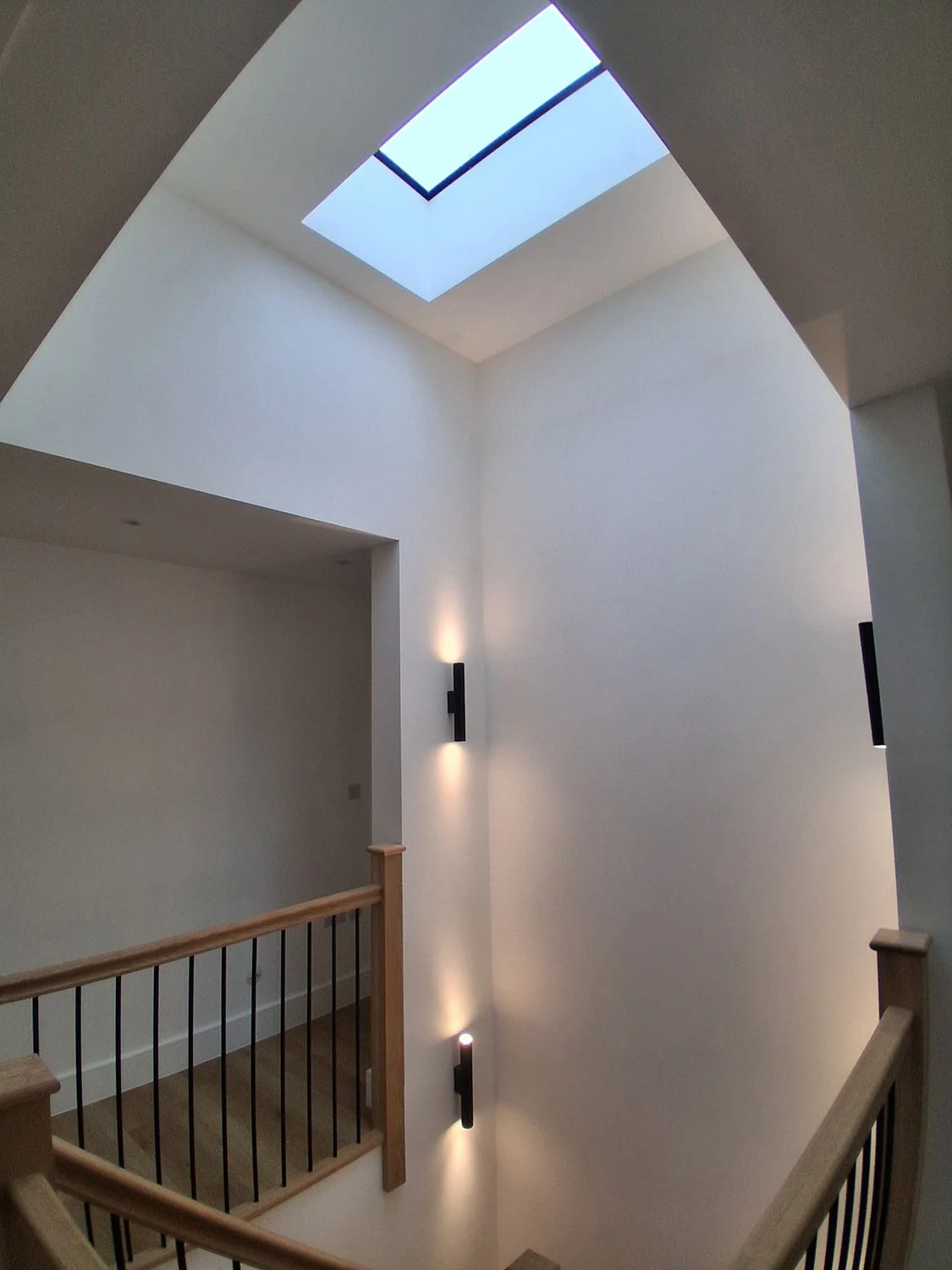
2017 Residential Refurbishment in the Hampton Village Conservation Area

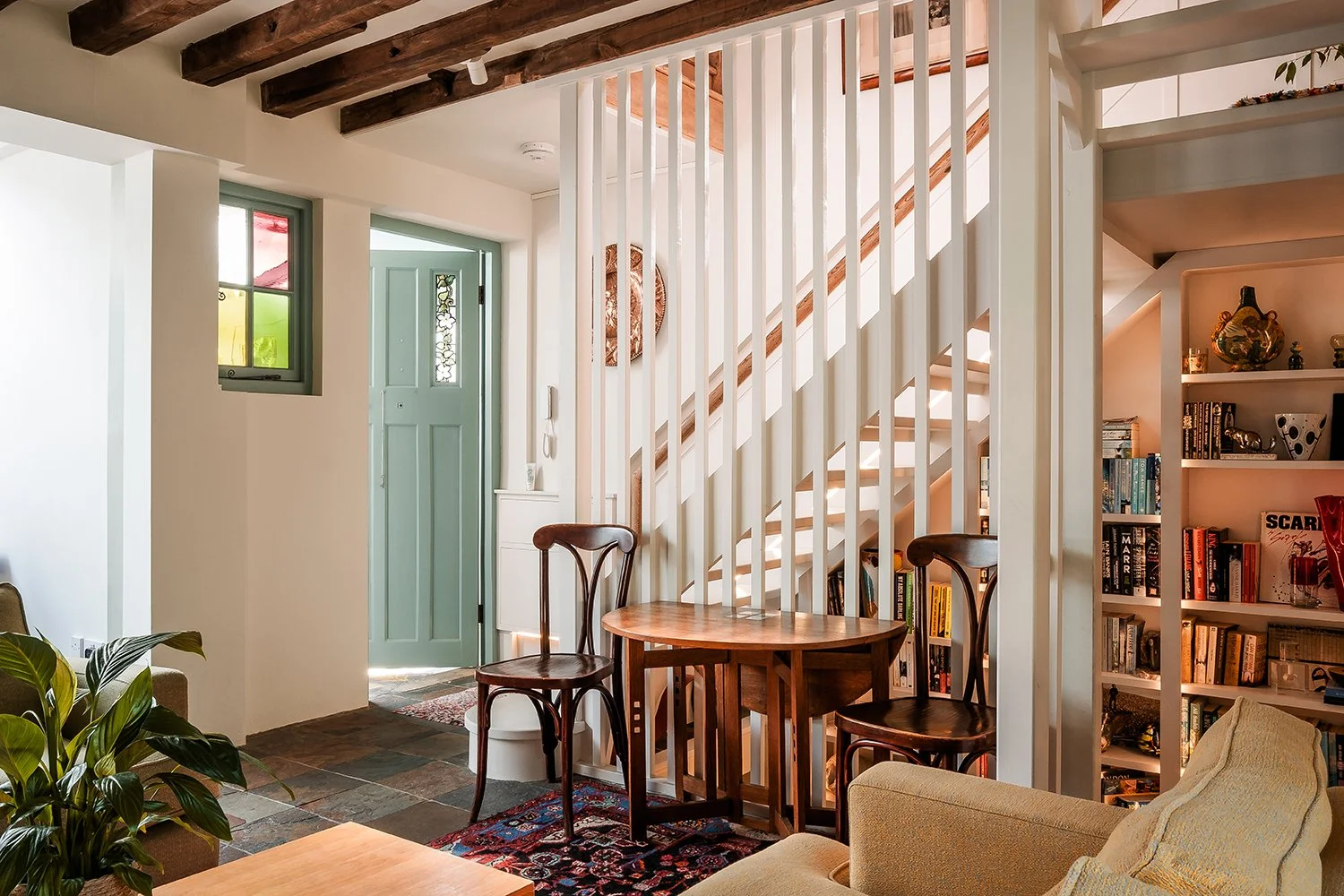
This project, completed in 2017, involved the sensitive modernisation of a 1920s home located within the Hampton Village Conservation Area. Although an older commission, it remains a strong example of how thoughtful design can enhance accessibility, daylight and everyday usability while respecting the character of a historic property.

The brief centred on upgrading the steep basement access, which was replaced with a new contemporary stair and glass balustrade. This intervention allowed the lower level to be transformed into a flexible space accommodating a third bedroom, a compact home gym and a new shower room.

To support the revised circulation, the entrance lobby was remodelled, and we explored options for improved pedestrian access and discreet bin storage along the widened pavement. At first‑floor level, new skylights were introduced to bring natural light deeper into the plan.

The existing greenhouse was proposed for conversion, addressing insulation and long‑standing water ingress issues. The refurbishment also included a complete electrical rewire and upgraded lighting throughout.

Although completed several years ago, this project continues to illustrate our approach to conservation‑area homes: enhancing comfort and functionality while preserving architectural heritage.

St Catherine school career fair

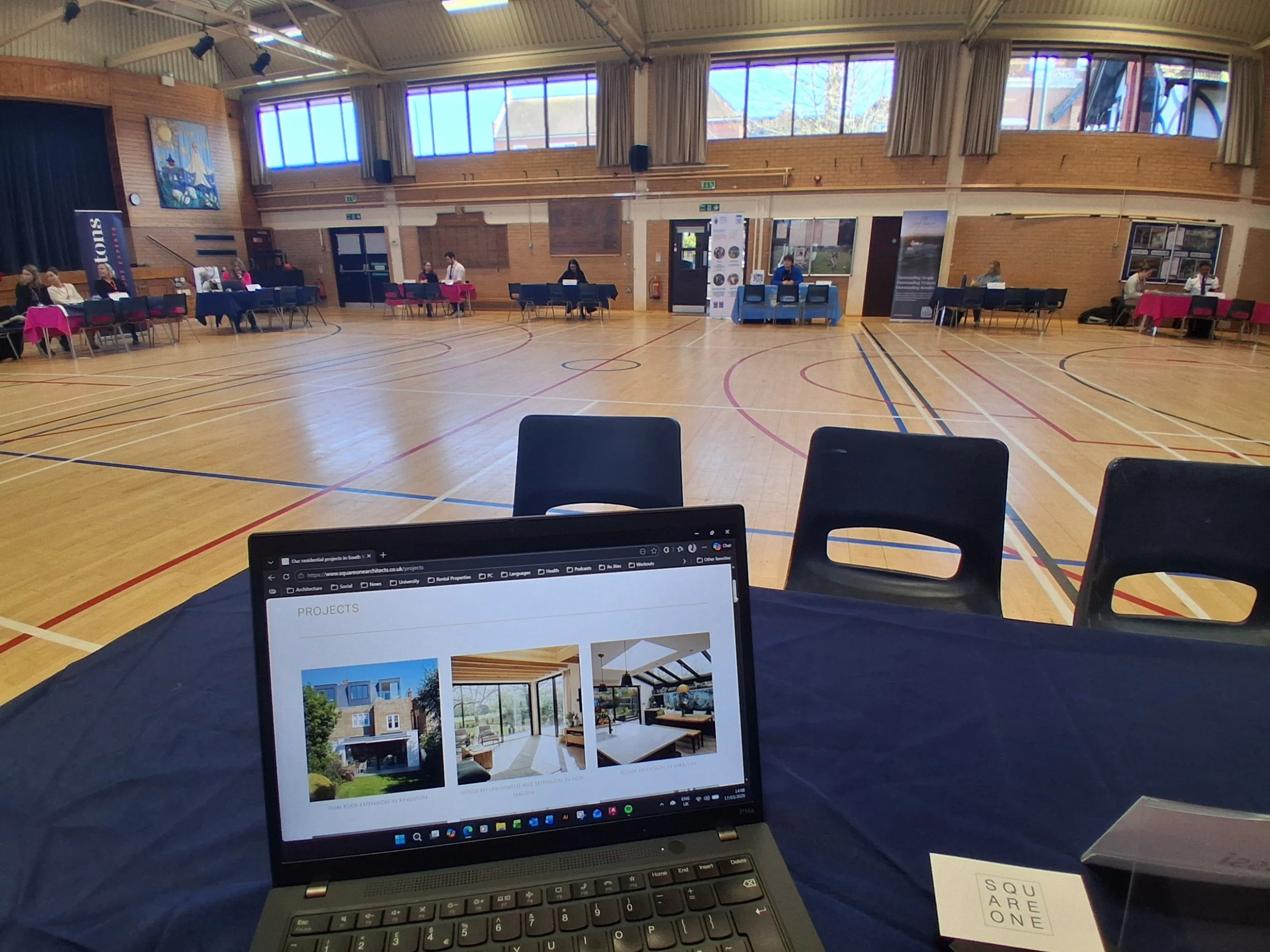
Today we are at St Catherine’s School in Twickenham, helping girls explore careers in architecture and learn the practical steps they can take to pursue them with confidence and clarity. It’s rewarding to see the next generation taking an active interest in a subject we love so much.

Kingston Site Visit: Shaping Space for Modern Living

We recently visited the construction site of our Kingston project, where the transformation is beginning to take shape. This multi-level extension scheme is designed to unlock the full potential of the property, both in footprint and function.

Our proposal includes a new, more comfortable stair—designed to improve flow and accessibility across all levels. At ground floor, we’re planning a rear extension, creating a generous open-plan kitchen, dining, and living space that connects seamlessly to the garden. A new utility room and guest WC will be repositioned for greater efficiency and privacy.

On the first floor, a side return extension will provide additional space for the bedrooms, with one room tailored for use as a dedicated home office. Above, a second floor extension—mirroring similar additions on the street—will house a new master suite complete with en-suite and walk-in wardrobe, offering elevated comfort and retreat.

With structural works underway and attic framing progressing, we’re excited to see the spatial strategy unfold. This project reflects our commitment to thoughtful expansion: enhancing everyday living while respecting the rhythm of the surrounding architecture.

Embracing Indoor-Outdoor Living: Design Tips for a Serene, Light-Filled Home

Today’s video features one of our projects in New Malden, where we placed particular emphasis on daylight and the relationship between interior and exterior spaces.

Embracing Indoor-Outdoor Living: Simple Design Tips for a Bright, Calm Home

Seamless indoor-outdoor living isn’t just a trend—it’s a way to feel calmer and more connected.

Why it matters

  • Lets in more daylight, so you use less artificial light

  • Makes rooms feel bigger and more open

  • Helps with seasonal comfort and passive cooling or warming

Features for a cozy, light-filled living room

  • Floor-to-ceiling glass doors: maximize views, light, and garden access

  • Natural materials: wood beams, textured rugs, and linen curtains soften the room

  • Green accents: indoor plants and seating oriented toward the garden blur indoor/outdoor lines

Let natural light and garden views shape your space for a serene, inviting home.
Teddington Transformation: A Site Visit Snapshot

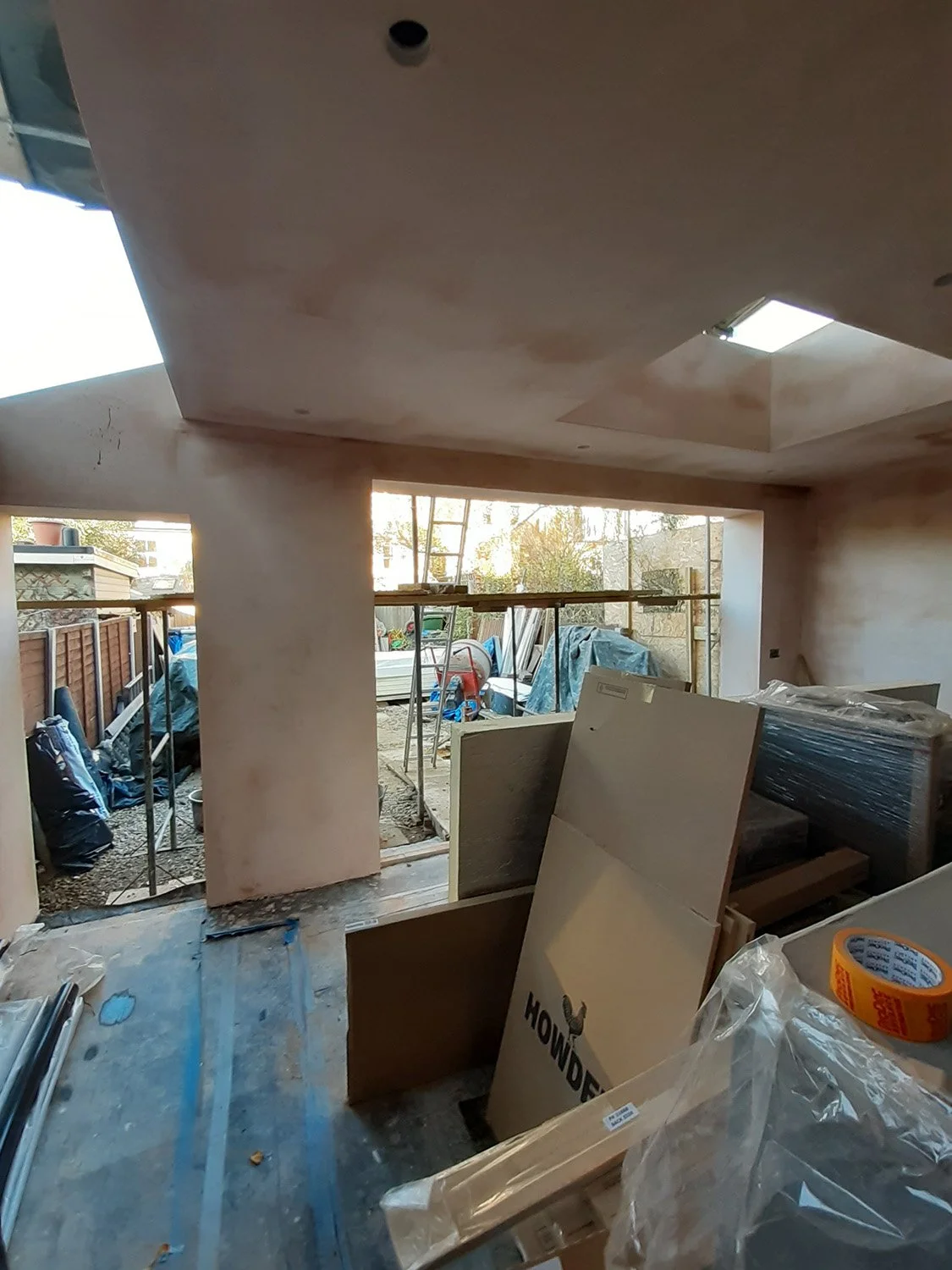
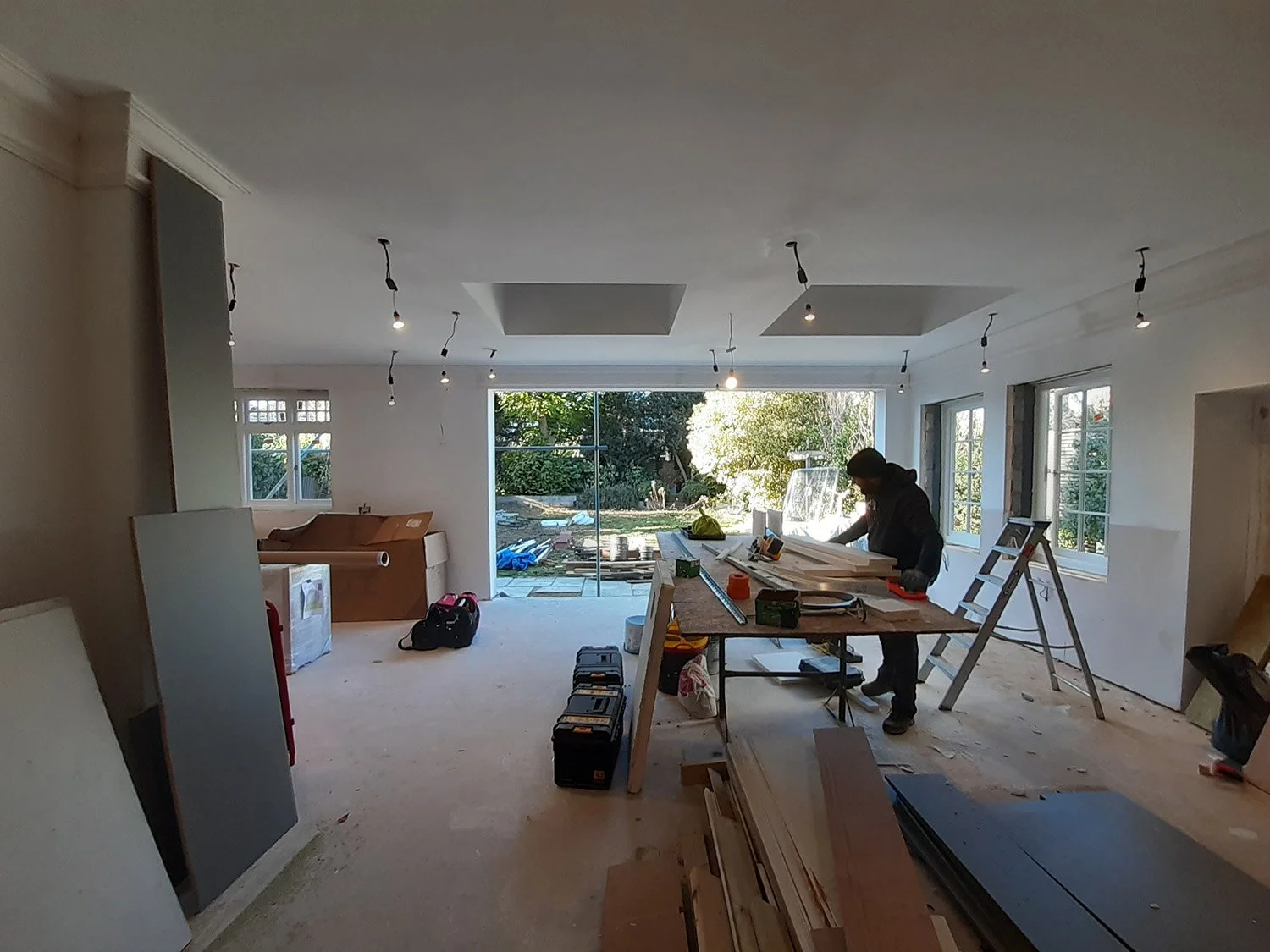
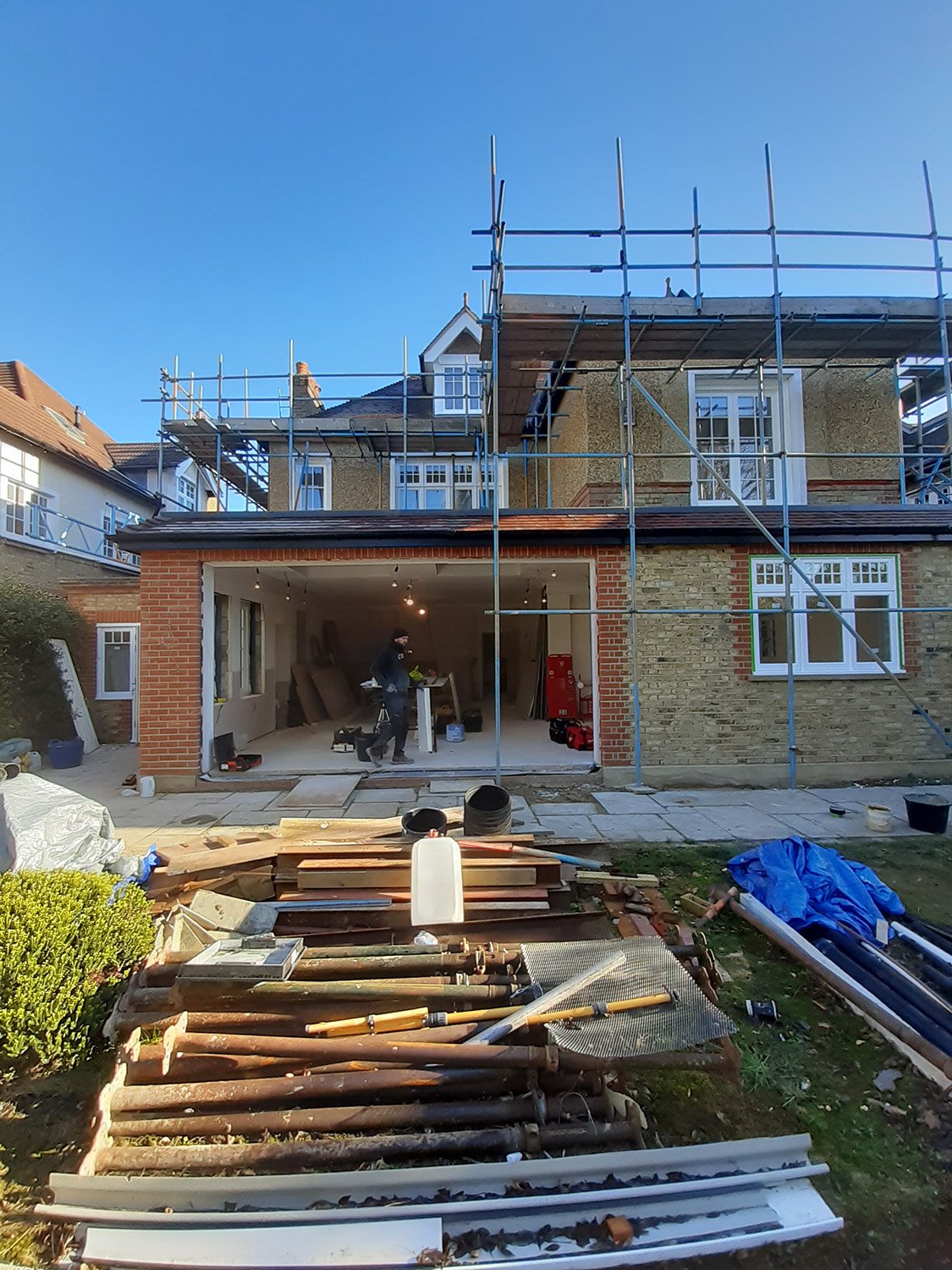
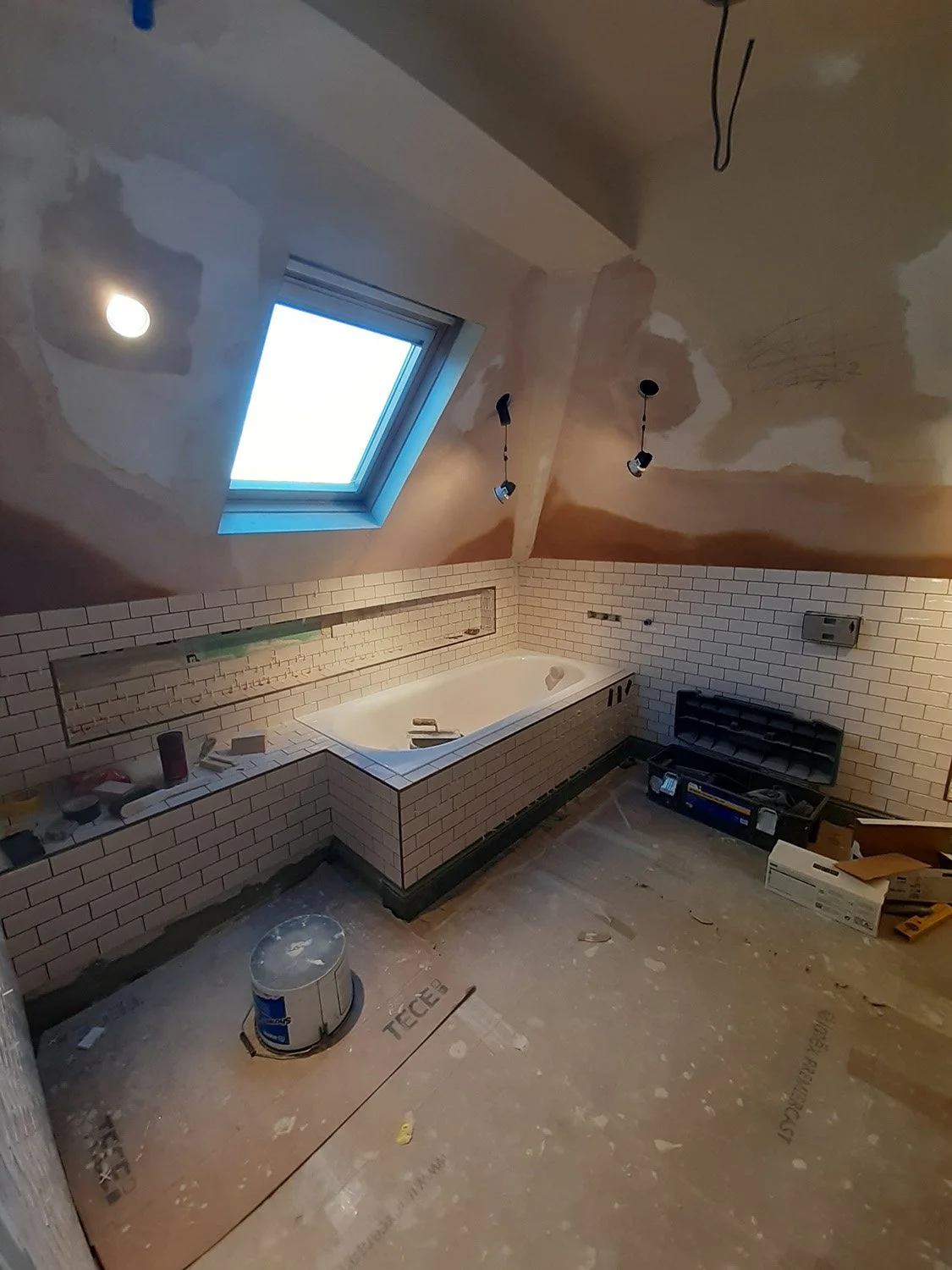
We recently revisited one of our ongoing projects in Teddington—a substantial detached home of townscape merit that’s currently undergoing a full architectural and interior refurbishment. The design responds to the evolving needs of a growing family, balancing heritage sensitivity with contemporary spatial flow.

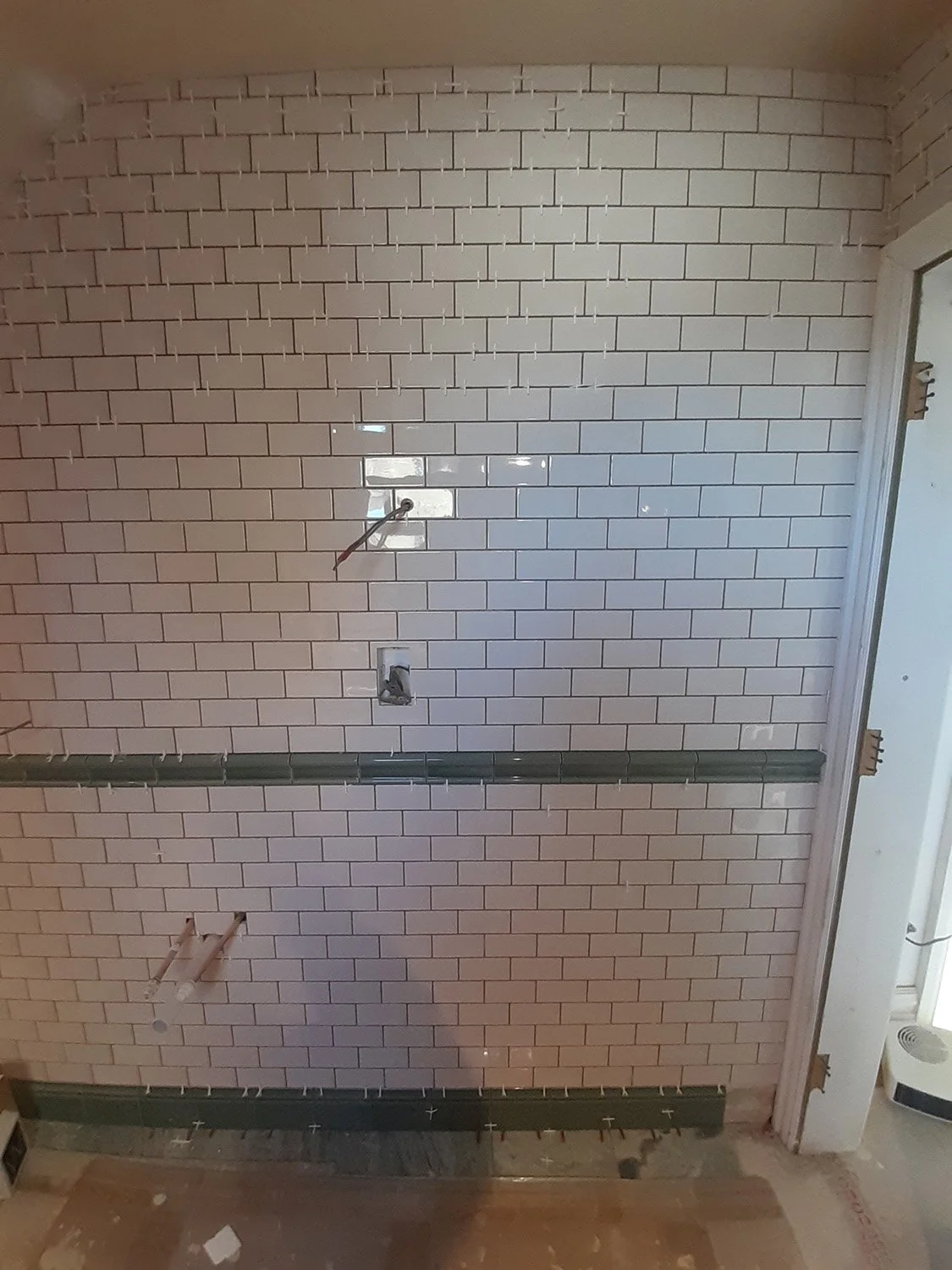
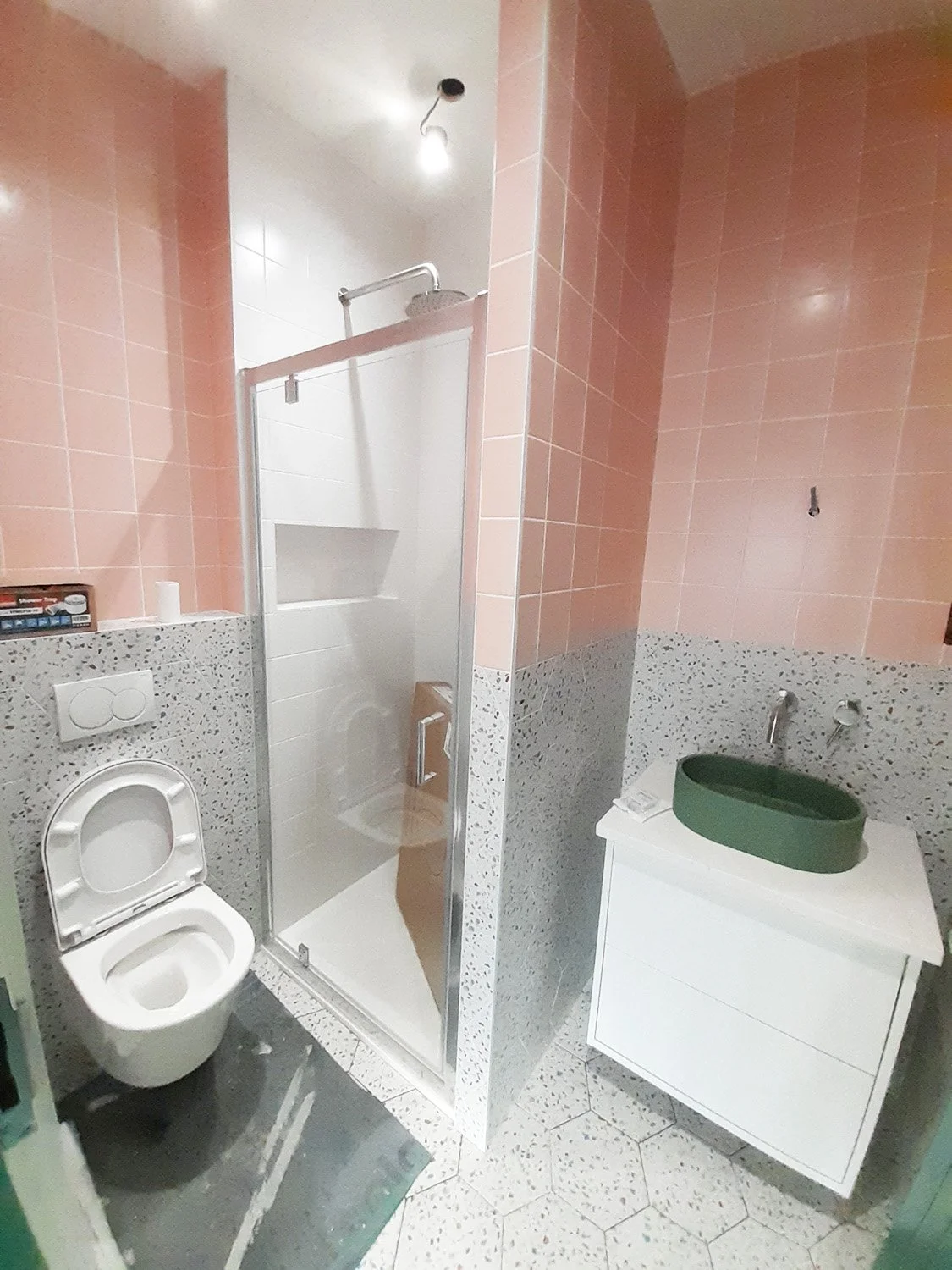
Internally, every room is being reimagined. Bathrooms are taking shape with new tiling, skylights, and bespoke detailing, while the open-plan living area—anchored by a new ground floor rear extension—is flooded with natural light through expansive glazing. The ceiling zones and lighting layout are being carefully orchestrated to support both ambient and task illumination, with recessed fixtures and pendant drops already mapped out.

This project exemplifies our approach: thoughtful spatial planning, material clarity, and a deep understanding of how architecture supports daily life. We look forward to sharing the finished result soon.

Terraced House Renovation in Twickenham: Modern Extension and Loft Conversion

We recently visited one of our projects under construction in Twickenham, South West London. This scheme showcases our expertise in residential architecture, home extensions, loft conversions, and daylight-driven design. The result is a modern, family-focused home that balances practicality with architectural vision.

During our visit, we were particularly struck by the clients’ bold choices in colours and finishes, which bring vibrancy and individuality to the interiors. Their confident approach to design perfectly complements the architectural framework, creating a home that feels distinctive, welcoming, and full of personality.

Ground Floor Extension: Open-Plan Living in Twickenham

The ground floor underwent the most significant change. We designed and built a rear extension of 4m, creating a spacious open-plan kitchen, living, and dining area — the social heart of the home.

Key features included:

  • A utility room and guest WC for everyday convenience

  • The existing reception room repurposed as a play area, supporting family life

  • A new porch, enhancing the entrance and creating a welcoming threshold

Natural light was a guiding principle. We introduced an opening between the reception and rear of the house, ensuring the ground floor feels bright and connected.

First Floor Alterations: Smart Circulation and Family Comfort

The first floor retained a family bathroom, while the main design challenge was integrating a new stair to the loft. After exploring multiple options, the client chose the solution where the stair was installed directly above the existing one. This decision preserved bedroom layouts, improved circulation, and maintained efficiency.

Loft Conversion: New Bedroom with En-Suite

The loft extension added a fourth bedroom with en-suite, creating a private retreat at the top of the house. This addition expanded usable space and future-proofed the property for growing family needs — a hallmark of our loft conversion projects in London.

Heating and Sustainability

Comfort and efficiency were balanced through:

  • Underfloor heating at ground floor level for consistent warmth

  • Radiators at upper levels, with provision for a heat pump to support sustainable living

This approach integrated modern technology while keeping the design practical and cost-effective.

Daylight-Led Design

Daylight was the thread running through every design decision. From openings between rooms to glazing in the extension, the house was designed to feel bright, spacious, and welcoming — a key principle in our daylight optimization strategies.

Conclusion: Twickenham House Renovation by Square One Architects

This project exemplifies our design philosophy: family-focused layouts, sustainable systems, and daylight-led architecture. By reimagining a traditional terraced house, we created a home that elevates everyday life through thoughtful design.

Our recent site visit confirmed how the clients’ bold interior colour palette has added character and individuality, making this Twickenham home a true reflection of their personality and vision.

If you’re considering a home extension, loft conversion, or renovation in Twickenham or South West London, Square One Architects can help you transform your property with creativity, precision, and vision.

Transforming a Twickenham Terraced House with a 1.5m Rear Extension

Twickenham Rear Extension: A Subtle Shift with Big Impact

At Square One Architects, we believe that small architectural moves can unlock profound spatial transformations. This recently completed project in Twickenham exemplifies that philosophy.

We were approached by the homeowner of a traditional 3-bedroom terraced house who wanted to improve the natural light, internal flow, and connection to their garden—without overextending the footprint or compromising character.

The Architectural Solution

  • A modest 1.5m rear extension was added to the ground floor, carefully calibrated to maximize usable space while remaining within planning constraints.

  • The internal layout was completely reconfigured, creating a more open, fluid living environment that responds to the way the client lives today.

  • Strategic use of glazing and material transitions enhances daylight and visual continuity between indoors and outdoors.


Watch the Transformation

Our video walkthrough captures the essence of this subtle yet powerful renovation. From the new kitchen layout to the garden-facing dining area, every detail reflects our commitment to thoughtful design.


Thinking of Extending Your Home?

If you're considering a rear extension in Twickenham or South West London, we’d love to help you explore what’s possible. Whether it’s a full renovation or a strategic reconfiguration, our team specializes in daylight-driven design, planning navigation, and bespoke residential architecture.

Contact us to discuss your project

Twickenham Residence

Full Refurbishment & Ground Floor Extension

We recently visited this completed project in Twickenham—a compact Victorian terrace that has undergone a full refurbishment and a carefully crafted ground floor extension. The result is a home that feels both grounded and expansive, with light, flow, and materiality at its core.

  • Spatial Strategy: The new extension unlocks flow and functionality, connecting kitchen, dining, and garden with a seamless threshold. A subtle shift in ceiling height and material palette delineates zones without compromising openness.

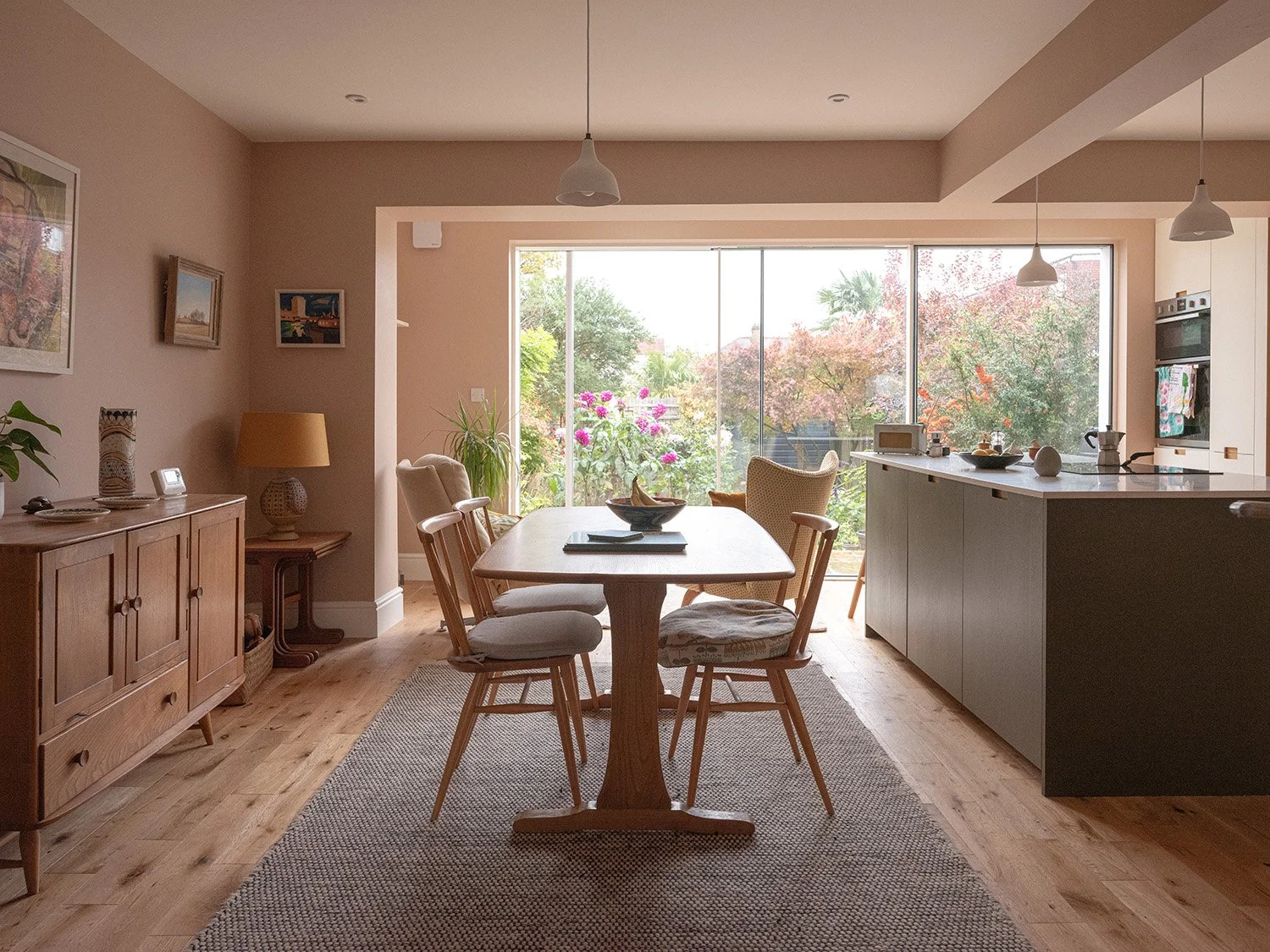
  • Daylight Design: Two rooflights and full-width glazing animate the interiors with changing light. The interplay of natural illumination and soft textures creates a calm, tactile atmosphere throughout.

  • Material Palette: Lime-washed oak, matte black fittings, and composite surfaces balance warmth and restraint. Bespoke joinery integrates storage and display, elevating everyday rituals.

  • Interior Detailing: The living spaces are curated with layered lighting, tonal contrasts, and sculptural accents. Every detail—from cill height to shadow gap—serves both function and feeling.

This project reflects Square One Architects’ ethos: thoughtful interventions, crafted materials, and a deep respect for light.

Let the Light In: Interior Design That Starts with Daylight

At Square One Architects, we believe that great interior design begins with light. Not just artificial lighting plans—but the nuanced choreography of daylight as it moves through space, interacts with surfaces, and reveals the texture and tone of materials throughout the day.

Whether we’re working on a home refurbishment in Hampton or reimagining a flat in South West London, our interiors are shaped by how light behaves. We consider the orientation of each room, the reflectivity of finishes, and the tactile qualities of timber, stone, and fabric. The result? Spaces that feel calm, coherent, and deeply personal.

Why Daylight Matters

Daylight isn’t just a source of illumination—it’s a design material in its own right. It affects mood, energy, and spatial perception. In our projects, we use daylight to:

  • Highlight architectural features

  • Enhance the grain and depth of natural materials

  • Create rhythm and variation throughout the day

From skylit kitchens in Teddington to layered living rooms in Thames Ditton, our interiors are designed to evolve with the sun.

Interior Design That Responds to You

Every client is different. That’s why our interior design services in Hampton begin with listening. We want to understand how you live, what you value, and how your space can support and inspire you. We tailor every detail—from furniture layouts to finish selections—with clarity and care.

Ready to Begin?

If you're planning a refurbishment in Hampton or looking for thoughtful interior design in South West London, we’d love to help.
Contact us to start your interior journey.

Improving Daylight, Space and Living for a Terraced Home in Teddington

We are sharing an update on our latest project in Teddington—a ground floor rear extension to a terraced house. This project shows how architectural changes can improve everyday living while remaining considerate of neighbours.

Project Background

The property has a non-original, partial width ground floor rear extension used as the kitchen. Our client wants to replace this with a new, full width rear extension. The aim is to create an open plan space for the kitchen, living and dining areas, making the main part of the home more practical and inviting.

Design Approach

Understanding the limits of a terraced property, especially regarding light and the relationship with neighbouring homes, guided our design. The client’s brief put focus on daylight, asking for interiors with more natural light.

Daylight Optimisation

To address this, we included a glass roof on one side of the extension, sloping down to 2.2 metres. This allows light to reach deep into the new living areas while reducing the impact on adjacent properties.

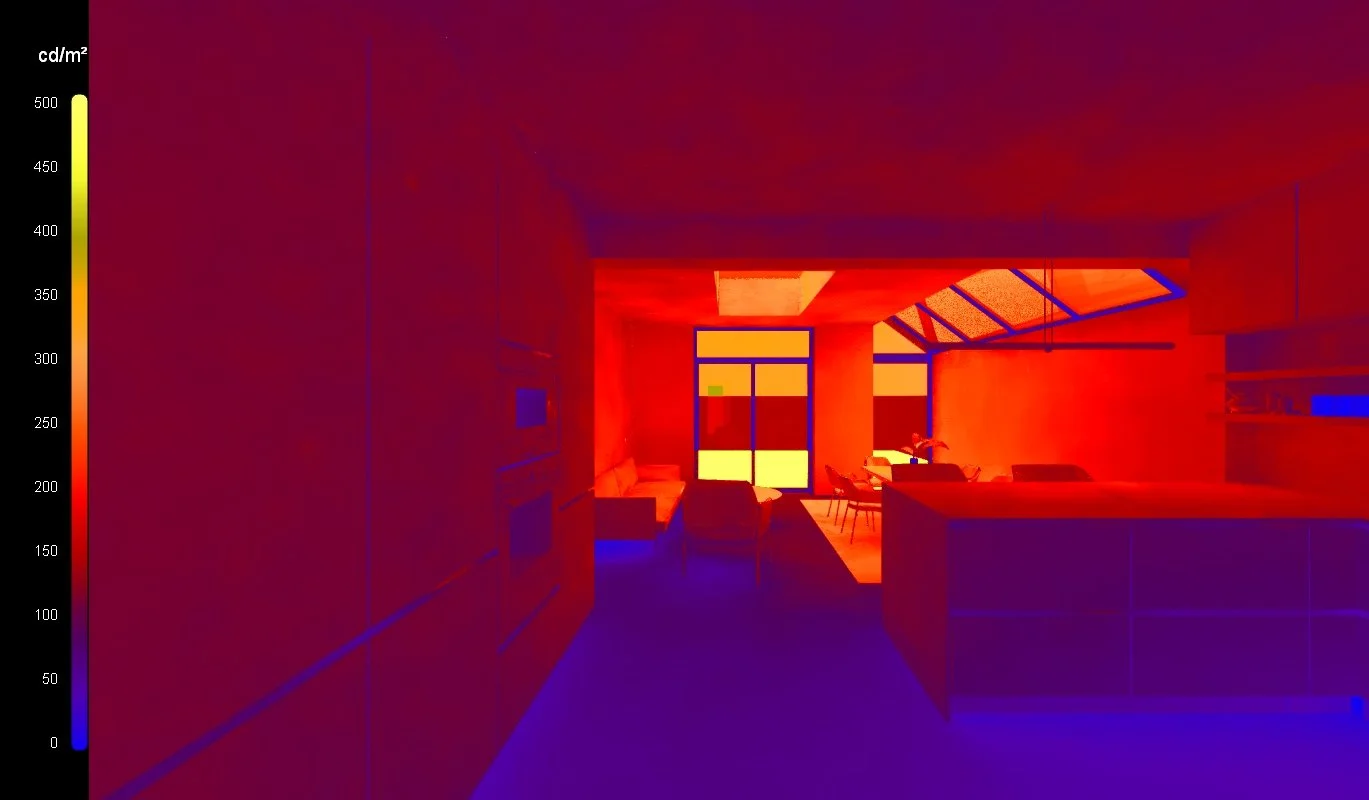
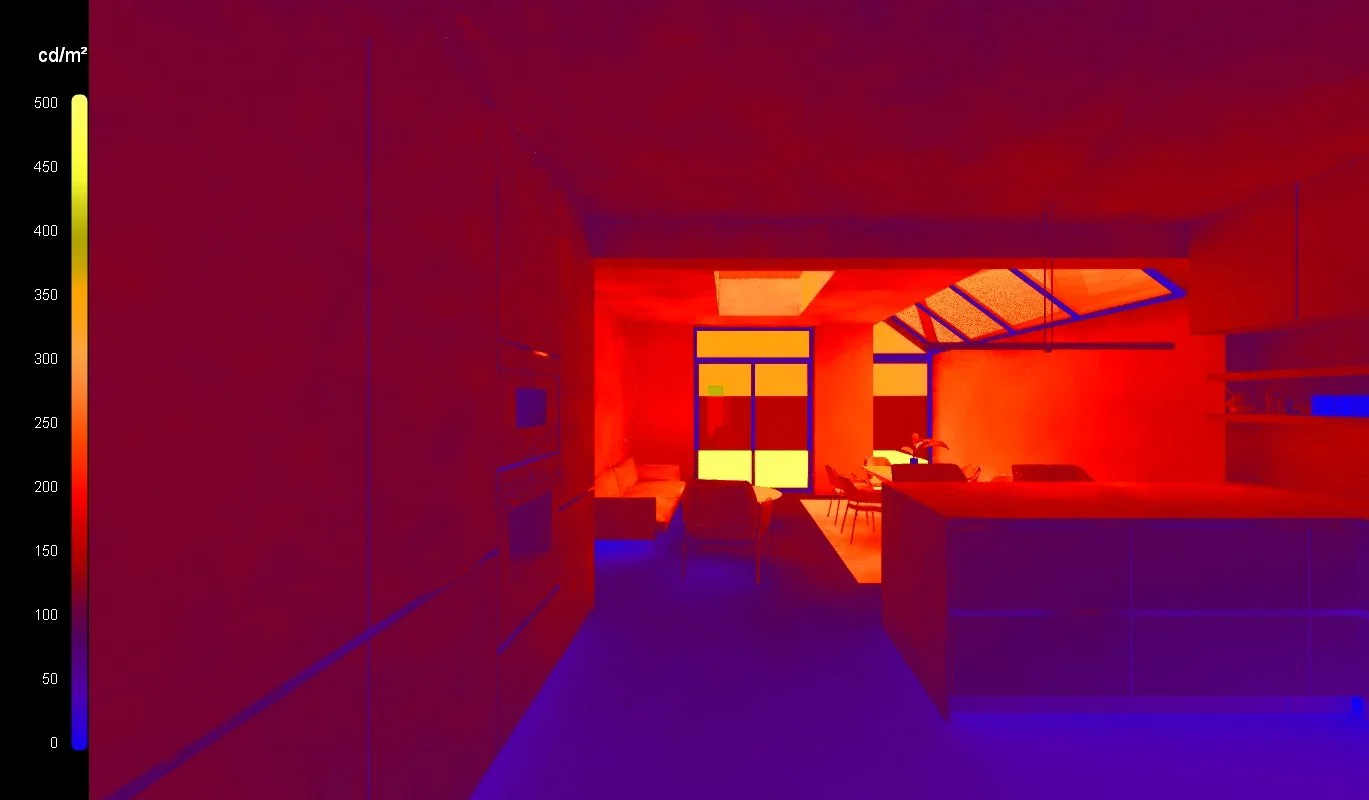
We also carried out daylight simulations, analysing how sunlight moves through the space during the day. These studies informed our artificial lighting plan, making sure the open plan kitchen, living and dining areas stay well-lit at any time, in any weather.

Modern Aesthetics and Connection to the Garden

The rear elevation will have “Crittal style” French doors. These create a connection to the garden and bring daylight into the interior. The industrial look of the doors fits with the new extension and respects the house’s character.

Sensitivity to Neighbours

We have considered the effect on neighbouring homes. By limiting the glass roof height to 2.2m on one side and looking at the overall size, we have reduced potential loss of light or privacy for neighbours.

Looking Ahead

With detail design under way, we look forward to seeing this project built. We think it will show how careful design can improve living in older terraced homes.

Stay tuned for progress updates, and contact us if you are considering a similar project in Teddington or elsewhere.

Luminance prediction on March 21st at 12.00

Luminance prediction on June 21st at 12.00

Luminance prediction on September 21st at 12.00

House extension in Sheen

We recently conducted a site visit to one of our residential extension projects in Sheen.

This four-bedroom semi-detached property is located within a Conservation Area, necessitating a sensitive approach to planning. The existing structure included a non-original side extension and a rear conservatory. Due to the deteriorating condition of both—evidenced by leaks in the side extension and the need to replace the conservatory—a comprehensive review was undertaken.

After extensive consultation with the clients, it was determined that removing the conservatory would provide an opportunity to construct a new extension, facilitating a larger kitchen area and meeting the clients’ requirements for increased storage space.

On the first floor, the layout has been reconfigured to create a new en-suite bathroom for the rear bedroom. This addition, which will feature a shower, is designed to significantly enhance the functionality and appeal of the space.

House extension in Kingston update

Our detached house refurbishment in Kingston is progressing well. The contractor sent a video after pouring the screed, which is now drying. More updates to follow!

Refurbishment of a house in Kingston underway

The contractor provided a video update of our ongoing internal refurbishment project for a residence in Kingston. The client initially engaged us in 2024, requesting concepts to optimise the ground floor layout. Situated within a conservation area and featuring no previous extensions, any changes to the property required careful consideration.

Approximately thirty years ago, following their purchase, the client undertook minor renovations and layout changes. Additional historical structural modifications included the removal of a structural wall and chimney in the current kitchen area.

In collaboration with the client, we explored relocating the kitchen towards the front of the house, enabling the dining and seating areas to be positioned at the rear. Our design includes new Crittall doors opening onto the garden, as well as double doors between the existing main corridor and the new rear-facing seating area.

We also proposed relocating the WC and utility room to a more discreet position, ensuring unobstructed views of the rear garden. Consequently, one of the two reception rooms at the front was modestly reduced in size, restoring its symmetry.

House extension in Kingston

We recently visited a project currently under construction for a detached house located in Kingston. The property originally featured a non-original entrance door positioned on the side of the building. Additionally, the existing staircase was also non-original and very steep. The house included several non-original extensions as well, such as a rear extension built in the 1960s that incorporated a utility room, and a glazed side return extension constructed around 2004-2005.

This project involves a number of alterations to the existing layout, including the installation of a new, more comfortable staircase designed to improve accessibility. A new rear extension is planned, which will be approximately 2 meters deeper than the existing one, allowing for the creation of an open-plan kitchen, dining, and living space. The redesigned ground floor layout will also accommodate the inclusion of a new utility room, pantry, and a guest WC for added convenience.

At the first-floor level, we have designed a side extension to increase the available space for the bedrooms. One of these enlarged bedrooms is planned to serve as a dedicated office space, catering to modern working-from-home needs. On the second floor, we have planned a roof extension that will house a new master bedroom complete with an en-suite bathroom and a walk-in wardrobe, enhancing the functionality and comfort of the home.

Throughout the design process, careful consideration was given to the importance of natural daylight, particularly for the middle room, which previously served as the kitchen but felt dark. The new design aims to significantly improve light levels, creating a brighter and more inviting living environment.

Canopy in Hampstead Garden Suburb

We recently completed a small yet highly interesting project within the Hamstead Garden Suburb. Aside from being designated as a Conservation Area, this part of London was originally developed in the 19th century as a pioneering model community and is characterized by beautiful houses set within a stunning landscape. The masterplan for the area was crafted by the prominent architect Raymond Unwin, with specific parts designed by Edwin Lutyens. Our client owns a maisonette located in a 1905 building constructed in the Arts and Crafts style, which was converted to residential use approximately 15 years ago. While the property itself is not Listed, it remains part of a conservation area and falls under the jurisdiction of the Hampstead Garden Trust. The entrance door of the property had been installed flush with the external wall and suffered from ongoing maintenance issues due to persistent water damage. In response, we assisted the client by designing a new canopy intended to shelter the door and prevent further deterioration. It was essential that all proposed alterations received the necessary approvals from both the local council and the Hampstead Garden Trust. The design of the canopy emerged from extensive dialogue with the Trust, and the final outcome harmoniously aligns with the aesthetics and character of the original building.

House refurbishment in Kingston under construction

We recently had the opportunity to visit a construction project in Kingston, which is situated in a designated conservation area. The house in question underwent a renovation approximately 30 years ago when the current clients initially purchased it, and they subsequently made only minor adjustments to the internal layout. There were some structural changes made in the past, including the removal of a structural wall and a chimney in the kitchen area, which altered the flow of the space. Our proposal focused on moving the kitchen toward the front of the house, which would allow for the dining room and seating area to be relocated to the back, enhancing the overall flow and functionality of the space. We also allowed for new Crittal Style doors for the rear of the house, as well as a double glazed door that would link the large corridor to the newly designated seating area. The original layout included a WC and utility room positioned at the back. In our proposal, we suggested creating a new WC by slightly reducing the size of one of the front reception rooms, which would in turn free up valuable space at the back for improved living enjoyment. The end result of these changes will be a beautifully designed, bright, open-plan kitchen, dining, and living space that showcases stunning views of the rear garden. More images are set to follow soon!

New project in Wandsworth

We have been appointed to act as Architects for a new project located in Wandsworth.

The existing house, which has seen better days, requires a thoughtful refurbishment, and this will provide an opportunity to optimize the internal layout of the property.

The project will feature several alterations on all levels of the home:

  • At level -1, we will create built-in storage under the stairs and form a large, welcoming opening towards the rear garden with either bi-folding or sliding doors that enhance connectivity.

  • At ground floor level, we will explore various alternative kitchen layout configurations to improve functionality and flow.

  • At first floor level, we will omit a bathroom in order to allocate more space to one of the two bedrooms as the clients confirmed their strong need for additional storage space.

  • At second floor level, the existing bathroom will undergo a complete refurbishment, and a new rear dormer will be carefully designed to enhance both aesthetics and space.

Additionally, the project will include the installation of acoustic panels in correspondence with the party walls, aimed at enhancing sound insulation and overall comfort for the occupants. Alongside this, new side windows will be added to improve the lighting conditions within the space, creating a brighter and more inviting atmosphere.