Not every residential project follows a straight path from planning approval to completion. Occasionally, homeowners find themselves dealing with unforeseen challenges that require a fresh approach, careful analysis and a clear strategy to move forward.
We were appointed to help rescue and redesign a substantial extension project for a detached family home in Surbiton. While the project is now approaching completion, the journey highlights the importance of accurate design information, coordinated construction documentation and experienced professional guidance throughout the building process.
The Original Vision
The property is a four-bedroom detached house that was originally intended to benefit from a new double-storey side extension, replacing an existing garden room and creating additional living accommodation for a growing family.
We first discussed the project with the owners in 2022 and provided an initial proposal to develop the design. Following these early conversations, the homeowners chose to proceed with an alternative designer, who prepared the planning, tender and construction drawings.
Planning permission was subsequently obtained and construction works commenced on site.
Problems Emerge During Construction
As the build progressed, concerns began to arise regarding the quality and accuracy of the design information being used on site.
A critical issue related to the roof geometry of the existing house. The approved drawings showed the original roof at a pitch of approximately 30 degrees, whereas the actual roof was significantly shallower, measuring closer to 17 degrees.
While this may appear to be a relatively minor discrepancy on paper, roof geometry influences numerous elements of a building's design, including ridge heights, junctions, structural arrangements and overall proportions.
The inaccurate survey information ultimately created a significant problem once construction reached roof level.
When Drawings and Reality Don't Match
Because the existing roof had been drawn incorrectly, the proposed extension roof could not align in the manner originally intended. The result was a mismatch between the existing and proposed roof forms, creating both design and construction challenges.
Disagreements then arose regarding responsibility for resolving the issue. Additional costs were requested, confidence in the project deteriorated and progress on site came to a halt.
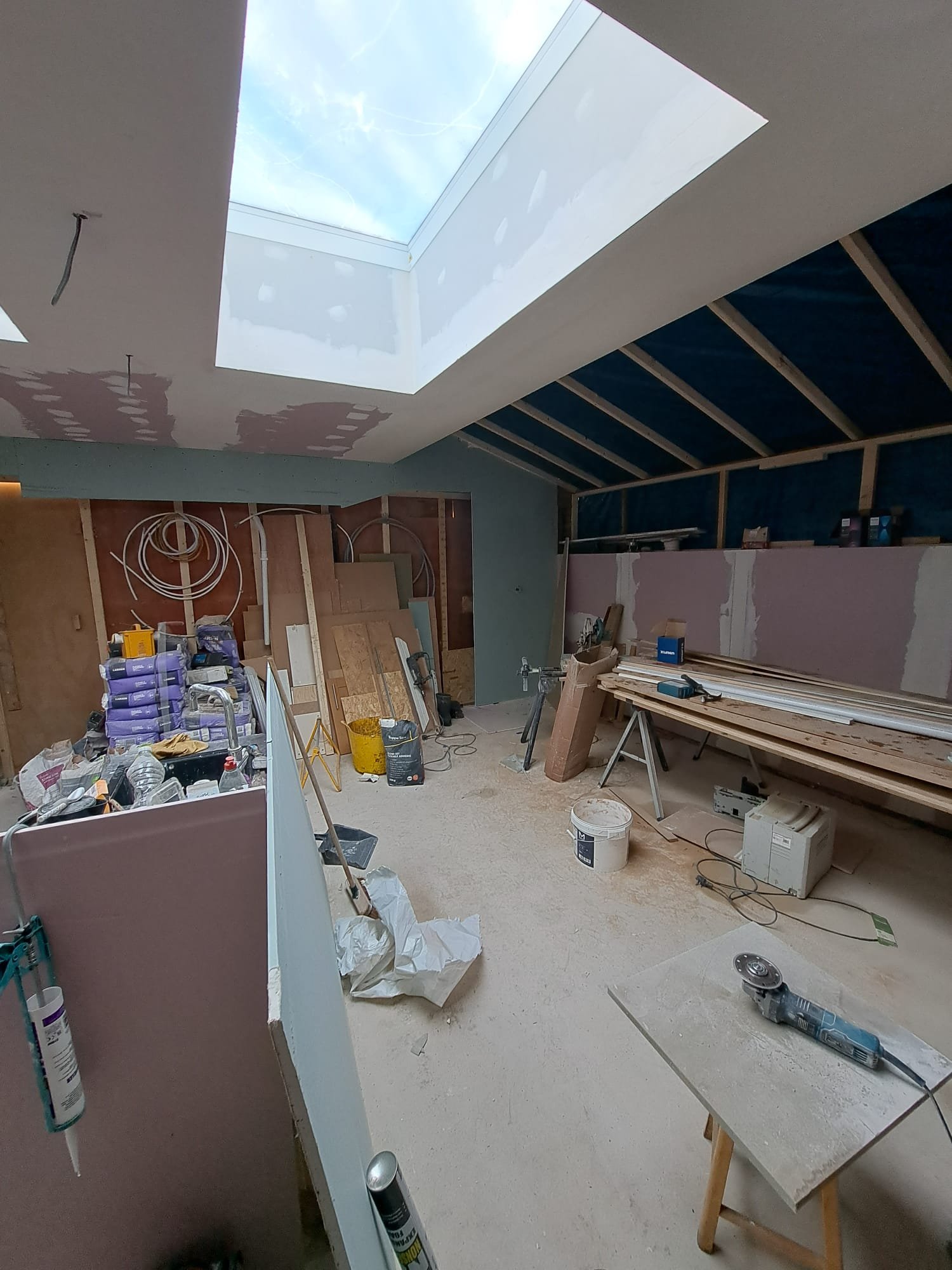
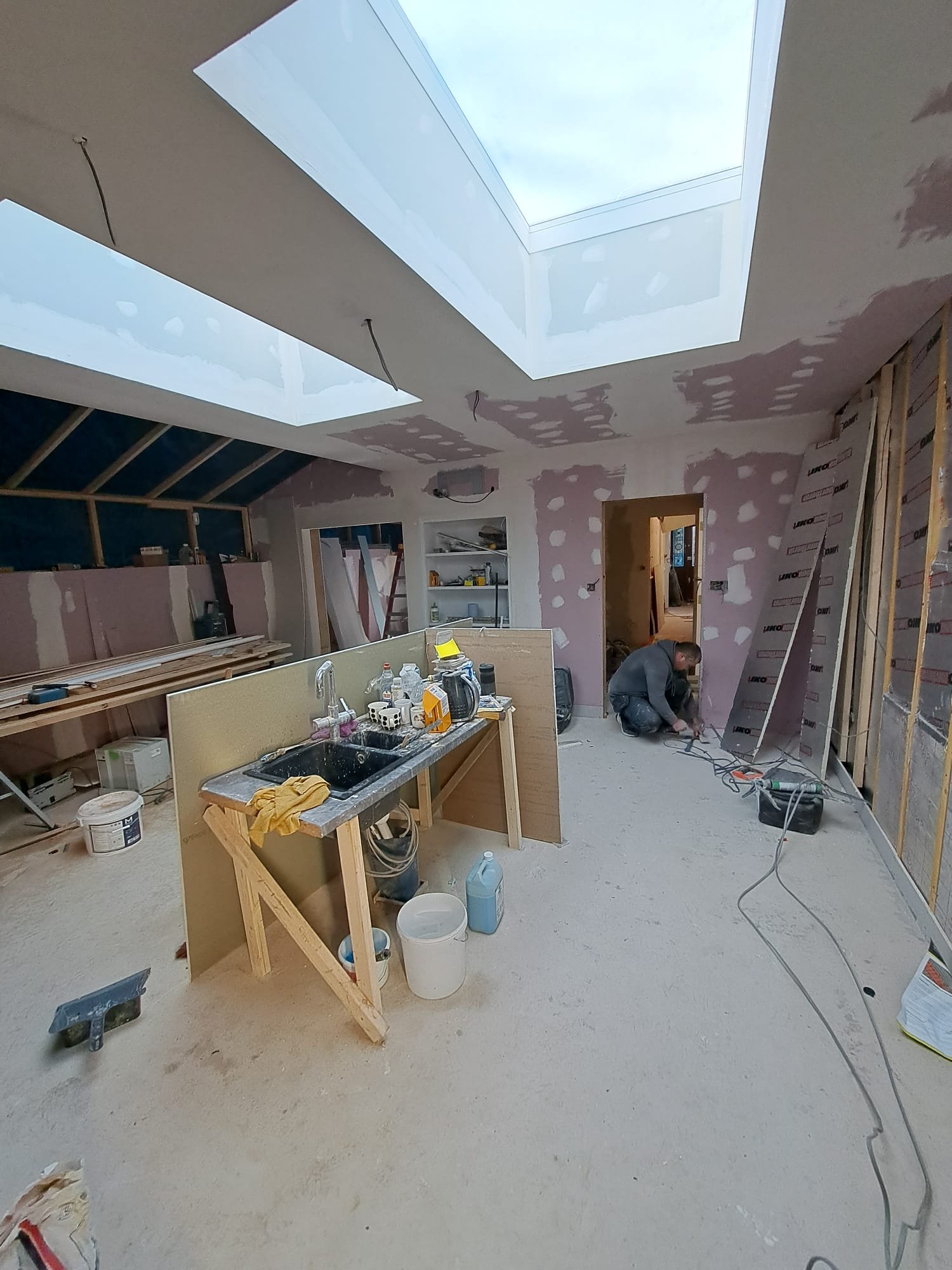
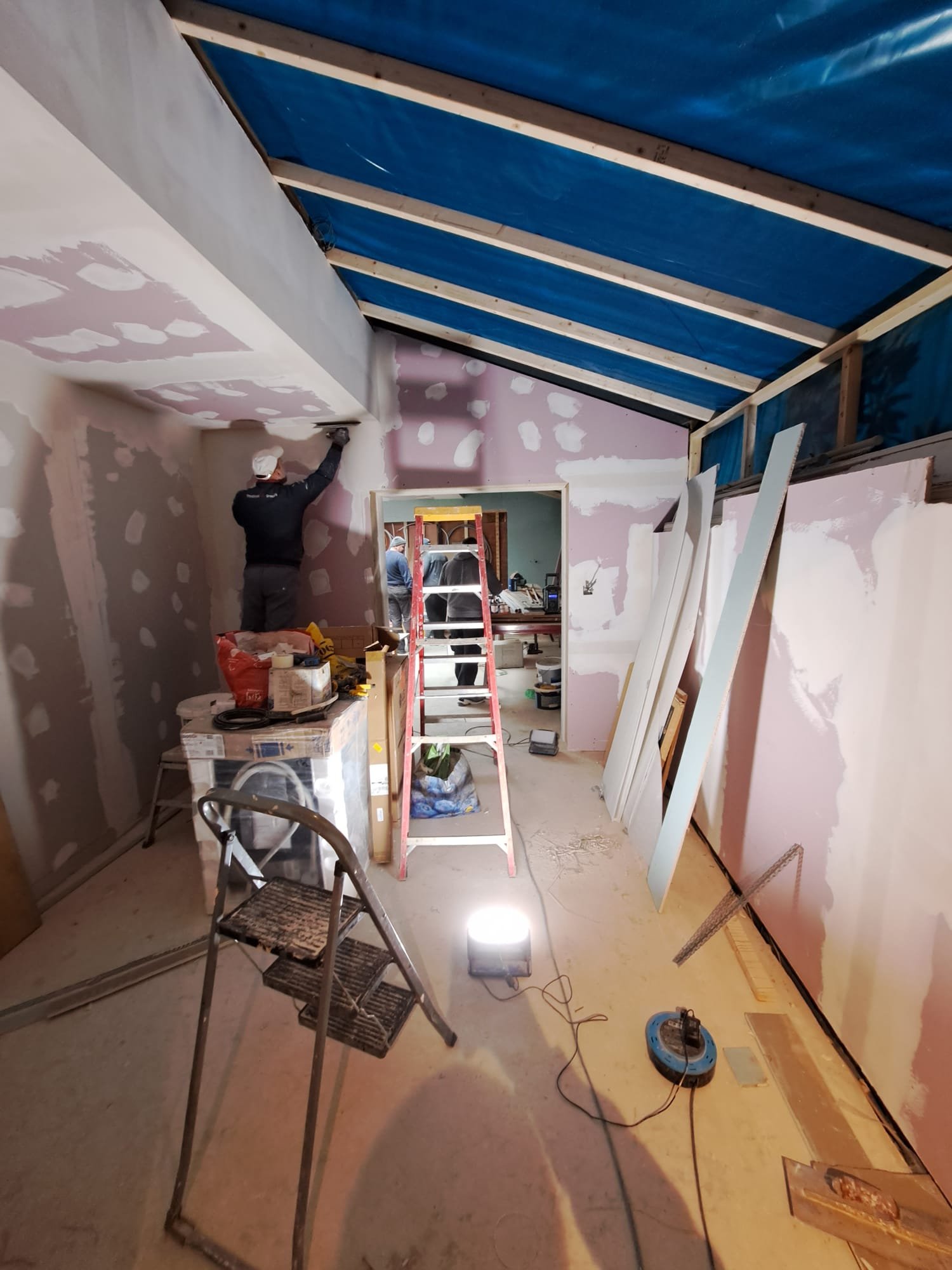
By March, construction had stopped entirely, leaving the homeowners with an incomplete extension and an uncertain route forward.
Developing a New Strategy
When approached to review the situation, our first step was to establish an accurate understanding of the existing building and assess the implications of the approved planning drawings.
It quickly became apparent that the approved drawings did not accurately represent the property as built. This raised concerns that the approved scheme could potentially be challenged if the discrepancy was identified during the construction process.
Rather than looking for short-term fixes, we worked with the homeowners to identify practical and robust solutions capable of delivering the design objectives while addressing planning and construction constraints.
Following a detailed review, two possible approaches emerged:
Lowering the roof of the new side extension to achieve a more appropriate relationship with the existing house.
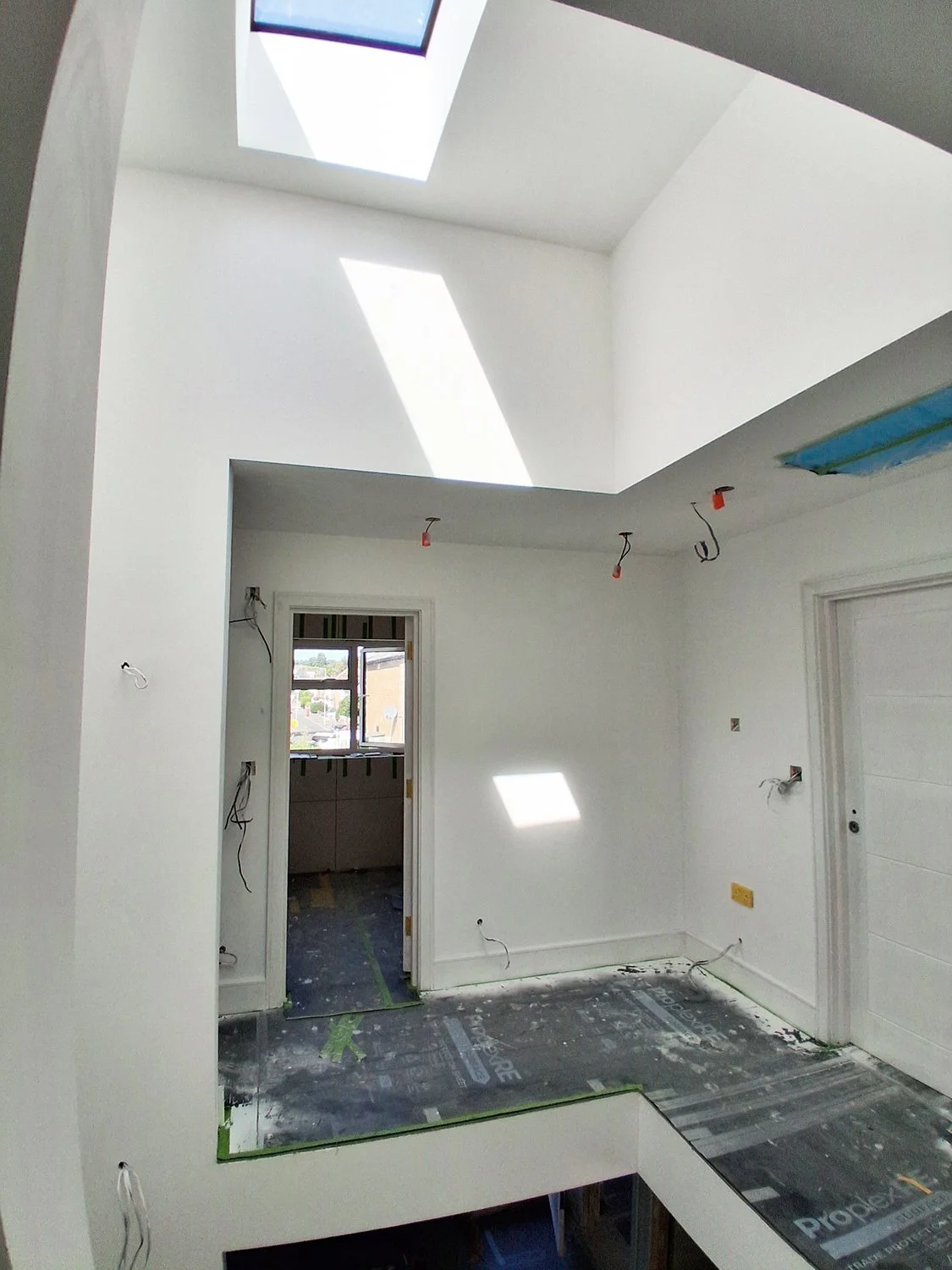
Raising the existing roof and introducing a flat roof link between the original house and the new extension, creating a more coherent roof composition while resolving the discrepancies caused by the inaccurate survey information.
Both options required careful design development and remained subject to planning approval.
After considering the planning, technical and aesthetic implications of each approach, the preferred solution was to raise the existing roof and introduce a flat roof section connecting the original dwelling and the extension.
This approach allowed the roof forms to relate more naturally to one another while creating a design that could be properly coordinated and constructed.
The revised proposals were subsequently submitted as a new planning application and planning permission was successfully obtained, providing a clear route forward for the project.
Returning to First Principles
One of the key lessons from this project is that successful problem-solving often requires stepping back before moving forward.
Instead of attempting to patch an incomplete design, the project needed to return to the design development stage. This meant revisiting the scheme, accurately recording the existing building and preparing a new planning application based on correct information.
Once a viable planning solution was secured, the next stage involved producing a full package of coordinated construction information, including architectural drawings, technical details and structural design prepared in collaboration with a new structural engineer.
This approach ensured that future contractors would be pricing and constructing from reliable, coordinated information.
Bringing the Project Back on Track
With a clear strategy established, the project was able to move forward once again.
The revised design resolved the discrepancies between the existing and proposed roof forms, provided a realistic foundation for planning discussions and created the technical framework required for the remaining construction works.
As the project nears completion, it serves as a reminder that investing in coordinated design information and experienced professional support is critical to the success of any residential extension.
Lessons for Homeowners
For homeowners considering an extension, this project highlights several important principles:
Accurate surveys are essential before design work begins.
Planning approval is only as reliable as the information submitted.
Construction drawings must be coordinated and technically robust.
Early design errors can become expensive construction issues.
Independent professional advice can often help unlock stalled projects and avoid further costs.
While no homeowner expects their project to stop midway through construction, the right design team and a structured problem-solving approach can often transform a difficult situation into a successful outcome.